Runebreaker (Part 5 - Worldbuilding: Fae)
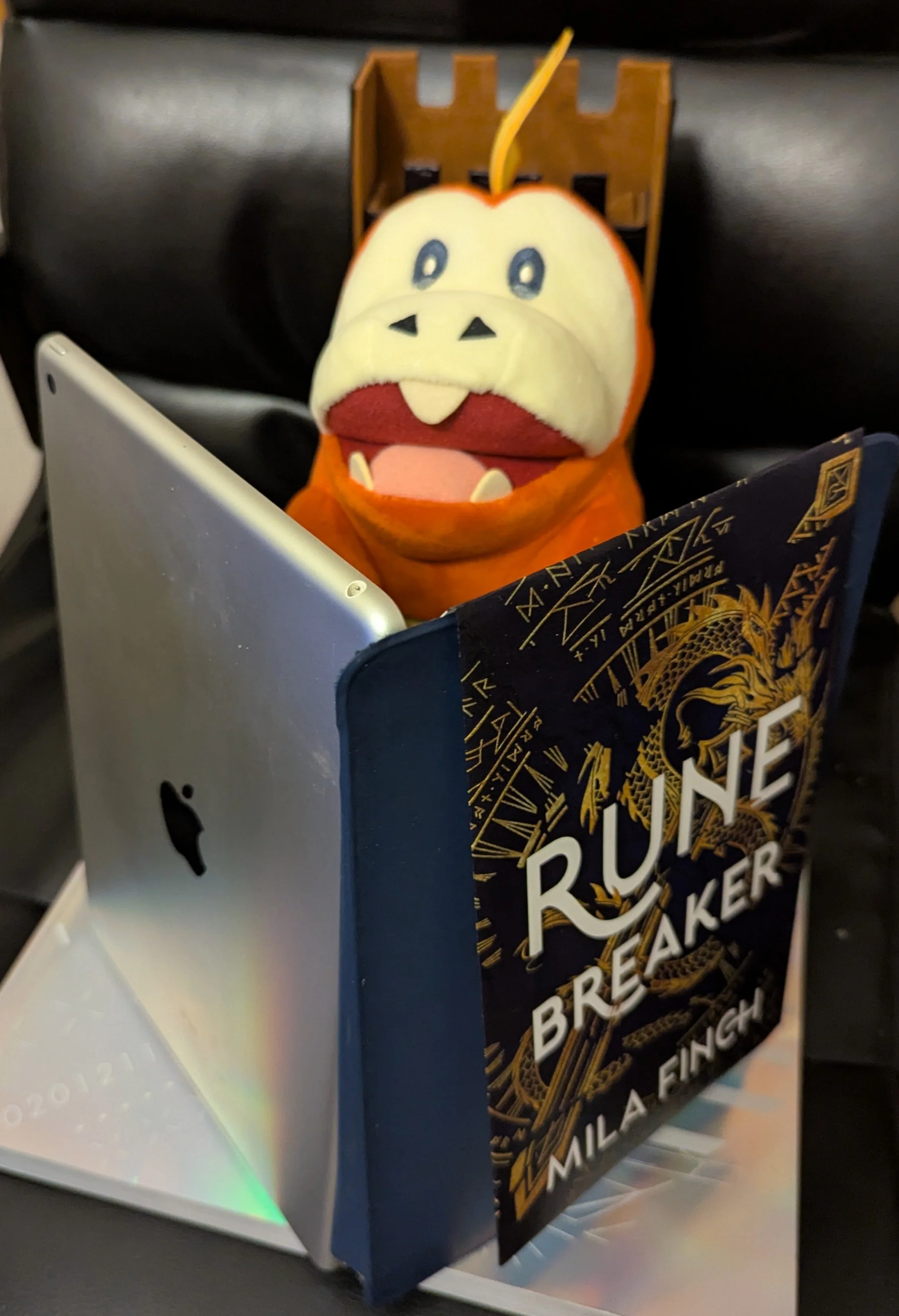
Hello, all. Welcome back to the review of Runebreaker, an indie Romantasy by Mila Finch.
This is Part 5 of an ongoing series. While you don’t need to have read all of the previous parts to understand what we discuss here today, I do recommend at least checking out Part 4, as this part was written at the same time as that one before being broken down to length.
If you’re all caught up (or don’t care), let’s break some bonds.
STATS
Title: Runebreaker
Series: [Untitled Trilogy] (Book 1)
Author(s): Mila Finch
Genre: Fantasy (Romantasy)
First Printing: January 2026
Publisher: Self-published to Amazon
Rating: 0.5/10
SPOILER WARNING
Throughout this review, there will be mild, unmarked spoilers for Runebreaker. I will do my best to keep the first paragraph of each section as spoiler-free as possible. Heavy spoilers will be confined to clearly marked sections.
WORLDBUILDING (continued)
The fae are where the Author’s Assumption truly started to rip apart the worldbuilding.
At a conceptual level, the ideas of fae as this oppressive force, ruling over humanity with their magical supremacy, isn’t terrible. It could have been executed well. Where Finch went wrong was, once again, prioritizing the emotions of the moment. Ideas that make sense and feel powerful in one scene are contradicted by ideas introduced to support the emotions of a later scene. It wouldn’t be impossible to tie these ideas together. Maybe it all makes sense in Finch’s head. Since it’s not, though, we can only go with what’s actually on the page, and the complete picture that’s on the page is actively at war with the emotions Finch wants us to feel.
Fae
The fae in this story are divided into multiple kingdoms. The only three visited in this story are:
Skaldir, the bad fae, cold and imperious nobles living in the north. Aelie is a native of Skalgard, the capital of this realm.
Sanguir, the good fae, who embody passion and sensuality and everything else that means we’re supposed to side with them in a cliché-heavy porno.
Thalir, the sea fae, who live underwater.
Within this world, the fae hold supreme authority. Humans either live as an underclass (in the case of Skaldir) or as vassals who pay tithes to the fae (in the case of Thalir). This is because, while human blood can fuel rune magic, humans can’t use rune magic themselves. In the case of Skaldir, this has lead to all-out racism, with even half-fae (who can use magic, albeit less effectively) being looked down upon.
On top of their rune magic, fae are astoundingly long-lived. It’s not clear if they are literally ageless or just unfathomably old, but Kairos is “over a thousand years old”. Bear in mind that this is meant to be a virile, attractive man who can make our mid-twenties heroine swoon with his sexual magnetism alone, even before his abilities as a provider are taken into account, while he is still behaving like an ass (and with nothing to indicate he’s a silver fox) - so, basically, this guy is supposed to be in his physical prime. It’s a safe bet that he’s nowhere near the end of his lifespan.
Contradiction 1 - Systemic Power
When the story begins, it’s not actually clear how long the fae have been in power. My original impression was that Skalgard had been a human city that the fae had conquered in Aelie’s lifetime. This is because Aelie and Rhyea’s plan at the start of the story is to flee Skalgard and start a new life elsewhere. They also talk about all the things they are going to do once they are out of the city, speaking in terms of luxuries that they think they will have easy access to. The clear implication here is that there are free human settlements elsewhere where the quality of life is significantly different.
Here’s the thing, though: that’s not true. Skalgard has been a fae city for at least two thousand years. No free human settlements exist. Exactly one human settlement is even mentioned (the vassal to Thalir, which explicitly pays tribute in return for the means to survive).
So why would Aelie and Rheya think that leaving Skalgard would improve their situation? I can understand them knowing luxuries exist, despite always living under fae oppression. The two of them steal from fae nobles, and we are explicitly told that this included luxuries. The issue is, why would they think those luxuries would be more accessible to humans in other places when the entire known world is rules by fae?
What makes things worse, though, is that the oppression of humans by the fae of Skaldir is meant to paint them as the bad guys. The fae live in luxury while the humans serve as a starving, servile underclass (though it’s implied that humans have some opportunity via trade and business, as the human slum is officially known as “the merchant quarter”). Humans are also sacrificed in large numbers each year for the Rite, fueling the city’s runes via mass bloodletting, exchanging their lives in exchange for rations for their families.
Why is this a problem? Because we’re not actually shown that the other fae realms, which we are meant to see in a positive light, are any better. Sure, the fae of Sanguir refer to the fae of Skaldir as “pious, silk-wearing slavers” … but we never see any humans in Sanguir, so we have no reason to believe they treat humans any better (assuming they allow humans in their kingdom at all). We also know (via the contrived power fantasy scene we discussed previously) that the fae of Sanguir do feel at least some sense of superiority to the humans. I don’t recall either (A) anything to indicate that the fae in Sanguir don’t use runes in their settlements or (B) anything to show us that the fae of Sanguir are investing their own blood to keep their infrastructure running.
All this is to say that, with the available evidence, there’s no reason to believe that conditions for humans are actually better in Sanguir. It seems more like the suffering of the humans is just out of sight and out of mind.
Then there’s Thalir. Apparently, Thalir accepts tribute from their human vassals in the form of human women. This is done to increase Thalir’s population - they’d rather have a large population of half-fae, raised in fae ways, than a small population of pure fae. This is presented as a positive arrangement for the humans. Not only are the women offered as tributes allowed to return home after having a certain number of children, but the vassal settlement is blessed with good fortune by the fae of Thalir, who protect them from storms and ensure abundant fishing.
The thing is … if we stop to think about it for even a second, this is Thalir offering a carrot while holding a stick. The same magic that lets them repay their village could be twisted to destroy human boats and wipe out their fishing (or, as is shown later in the book, send tsunamis to obliterate the settlement directly). And if Thalir is really so desperate to boost their population that they’re willing to weaken their magic by diluting their bloodlines, despite knowing what they need magic for (more on that in a second), they must be in survival mode. A civilization in that state would absolutely use the stick if required. They aren't actually show humans more respect than the fae of Skaldir do. They’re just more polite in flexing their dominance.
Add to this the fact that, if one thinks about it for even a moment, the relationship between the humans and fae of Skaldir is mutualistic, not some unreasonable tyranny.
Humans are protected by Skalgard’s walls (there are magical threats out in the wilderness that make those walls necessary), use its infrastructure (such as the inexplicable reservoir in the middle of town), and build economic livelihoods for themselves. Yes, the Rite is horrible, but it serves a purpose, and we are explicitly told that the volunteers (that's right, it’s never established that Skalgard uses anything but criminals and volunteers for the Rite) are compensated with years of food for their families. And sure, we can get mad at the fae for not sacrificing themselves, but if fae really do reproduce so much more slowly than humans that Thalir is willing to compromise their magic via a half-fae breeding program, then Skaldir fae probably can’t afford to spend their own lives in an annual ritual to refuel the city’s runes. If the argument is that Skaldir fae could give blood without dying … first, that is never established, but even if it was, that still leaves the matter of the Rite only uses criminals (a brutal punishment, but clearly not out of the ordinary for this type of world) or well-compensated volunteers.
Look, maybe I’ve just been made cynical by reading too much Warhammer 40K content, yet it really does seem like conditions from humans are equally bad no matter where one goes in the world. Skaldir may be the most openly oppressive, but they also give humans the most in exchange (compared to Thallir, where the compensation comes with an implied thread, or Sanguir, where humans get nothing). It balances out. So when Finch tries to insist that they are unambiguously bad, while the fae of these other two kingdoms are unambiguously good, it doesn’t read like a carefully thought-out scenario of systemic oppression. It reads like she just wants us to really hate Skaldir without thinking too hard about what life is like for humans in the rest of the world.
Contradiction 2 - Remembering the Rite (Heavy Spoilers)
This is point we already covered somewhat in discussing Show Don’t Tell and also touched upon last week, but I want to get a little further into it here.
The Rite is initially presented as the means by which Skaldir powers its runes. Later, it is revealed that it’s actually intended to recharge one of the two runes that keep dragons imprisoned in another dimension. We are meant to think that Aelie is intelligent for figuring this out when no one else could.
Why could no one else figure this out?
Remember, fae live for “over a thousand years”, at minimum. We are told that dragons have been imprisoned for “two thousand years”. Sure, the humans might have forgotten, but surely the fae remembered where the seals are?
To put this in perspective: the American Civil War was 160 years ago. Less than 70 years ago, there was a TV interview with a man who was alive during the American Civil War. Someone with living memory of the event was able to testify about it, and that testimony is on our living memory. And, sure enough, we remember the major battlefields and the important players of that war. Gettysburg and Antietam are effectively tourist destinations at this point.
How, then, would knowledge of the feared enemy of the fae be allowed to fade so quickly (relative to the lifespans of the fae), even while the fae of Skalir are actively maintaining their seal? The fae of Thalir remember their seal, and they are presumedly maintaining it, so shouldn’t they also remember that there’s another seal just up the road in Skalgard?
I feel like Finch gave the fae these immense lifespans to play into the fantasy of eternal youth and beauty that are so common in these types of Romantasy stories, without wanting to deal with the ripple effects that would have on the plot. It’s not like she didn’t think about those impacts at all. She was perfectly happy to lean into the concept of fae as bored hedonists, trying to fill the endless years with amusements, when it made Sanguir (and Kairos more specifically) into something more sensual. There isn’t a good reason that she couldn’t have taken things a step farther and written her plot to account for the effects of these lifespans on living memory and historical records.
(Also, while we are on the subject of maintaining seals, we are never told how the Thalir maintain their seal. There is every chance that they are also butchering people for their version of the Rite. If they have some other alternative, we are never told what it is, whether they ever shared this potential alternative with Skaldir, or whether said alternative could even be implemented for the Skaldir seal. Just wanted to make sure we are clear on this point, as “Skaldir should have done better” is going to be used to justify Aelie's actions when we get to the plot analysis.)
EMPTY HEARTS
All right, the setting doesn’t make sense. What about the characters? After all, character is the heart of the story (especially a story built on emotion, as is supposed to be the case for Romance). If the characters are strong, the story can still pull together.
Sadly, this book doesn’t have strong characters. The two leads could charitably be described as bundles of clichés, and their perspectives synergized with the contradictory worldbuilding to make them seem utterly detached from reality. As for the rest of the cast, while most of them are functional, there is only one who can genuinely be described as an actual character in his own right … and he’s the character we’re supposed to hate.
We’ll begin our exploration of characters on Sunday, April 26th, with the first half of the analysis of Aelie. Until then, thanks for stopping by. Please remember to subscribe and share if you enjoyed what you read here. Take care, everyone, and have a good week.

Looking for more Fantasy worldbuilding? Check out my free novella, The Unbottled Idol, available over in Tales of the Five Worlds!
Mohsen Yavari's task within the Imperial Inquisition of the Kimian Empire is simple: monitor the gods' activities in the mortal world. However, when a diplomat is killed by a goddess, a maverick inquisitor recruits him for her investigation. Their search for answers will lay bare sinister truths, with a child’s soul hanging in the balance.
Join me on this adventure of intrigue, martial arts, and divine assassination!