Runebreaker (Part 11 - Plot: The Collapsing Climax)
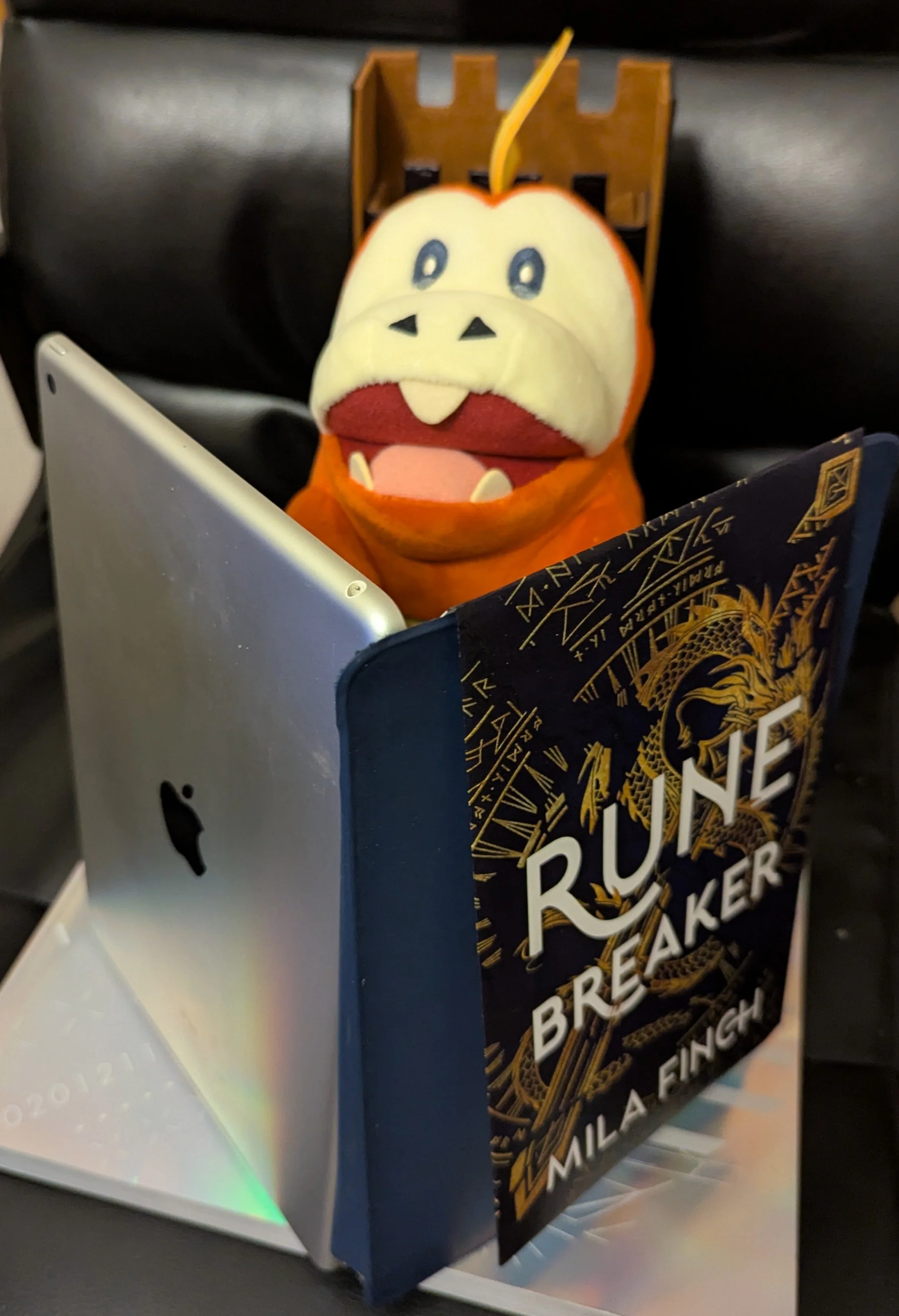
Hello, all. Welcome back to the review of Runebreaker, an indie Romantasy by Mila Finch.
This part will conclude out analysis of the plot, focusing specifically on the buildup to, and execution of, the climax and falling action of the story. Though you don’t need to read all of the previous parts of this review to understand this plot analysis, I am going to be referring to points I made when discussing the worldbuilding (Parts 4 and 5), Aelie’s characterization (Parts 6 and 7), Vaeris’s characterization (Part 9), and the issues with earlier sections of the plot (Part 10). It may be helpful to at least glance over those parts if you haven’t read them already.
Also, this is the part where I discuss the ending that Finch was so proud of and asked readers not to spoil. I will not be able to honor her request, as doing so would require me to hurl unsupported criticisms at her writing. This entire section will have unmarked, heavy spoilers for the back half of Runebreaker.
With all that established, let’s break some bonds.
STATS
Title: Runebreaker
Series: [Untitled Trilogy] (Book 1)
Author(s): Mila Finch
Genre: Fantasy (Romantasy)
First Printing: January 2026
Publisher: Self-published to Amazon
Rating: 0.5/10
SPOILER WARNING
As stated above, this entire part will feature heavy, unmarked spoilers for Runebreaker, with emphasis on the climax and ending in particular.
PLOT (continued)
The Peace Conference
For a little context: the peace conference is set in Thalir (realm of the sea fae), in the underwater citadel of that kingdom. The leaders of the various delegations swear an oath of nonviolence for the duration of the conference. This oath is sworn upon a rune that apparently also maintains the structural integrity of the citadel (plus one other, teeny-tiny, somewhat important function).
During the conference, Vaeris drops the mask and reveals himself as a villain. He tries to take Aelie as a hostage. When Aelie fights back, this apparently violates Kairos’s oath of nonviolence (despite the fact that Vaeris is not violating the same oath by using violence against Aelie and outright threatening to kill her).
To save Kairos, Aelie breaks the rune that holds the citadel together. This dispels the oath and brings the citadel down on their heads.
Oh, and that teeny-tiny other function I mentioned?
Yeah, that was one of the two seals imprisoning the dragons.
The Dragon Threat
It is at this point that Aelie learns of the dragons. This happens in the moment via a vision and then is built upon later by exposition from Kairos and other fae in Sanguir.
The short version is that dragons are godlike magical beings who once oppressed the fae in the same manner that the fae oppress humanity. The leader of the dragons recognizes Aelie as a Speaker and commands her to go break the other seal (which we later learn is in Skalgard). Vaeris is already working for the dragons and is counting on Aelie to break the rune in Skalgard.
The implied threat is that the dragons will destroy the world. Aelie has nothing but the word of the fae (who are the ones with the most to lose if the dragons return) to go on for this, but that’s fine. It’s not like she has any reason to think an even more magically powerful race will have any reason to be kinder to humanity than the fae are. Her condemnation of Vaeris therefore makes an amount of sense.
I’ve already covered the two major issues with the dragon threat while breaking down the worldbuilding and characters.
It is a very hard sell that the fae are not more aware of the dragon threat, given their long life spans and the fact that Skalgard needs to actively maintain its rune with annual blood sacrifices.
Aelie’s refusal to acknowledge that Vaeris is justified in his grievance against full-blooded fae, when that same grievance sanctifies her actions, creates a moral dissonance in the story.
An issue I am less concerned about is the fact that both Thalir and Skalgard thought it would be a good idea to plug important runes for infrastructure and law enforcement into the rune that keeps their oppressors from returning. Imagine if the only thing keeping Adolf Hitler from rising from the grave was a cryogenic chamber fueled by a single diesel generator, and someone thought it would be a good idea to plug the entire Berlin power grid into that generator. However, as stupid as this is (especially since, again, the dragons are potentially in living memory for the fae), Aelie’s power to break runes is supposed to be unprecedented. Maybe the best fae engineers all looked at these runes and said, “Well, the rune has a lot of excess power that can be bled off safely, so there’s no danger if we do this in moderation.” Maybe, if they’d been aware of Aelie’s power, they’d have done things differently.
The weak link here is actually Vaeris.
Vaeris’s Plan
With the reveal of Vaeris’s true nature, all of his past behavior towards Aelie comes into focus. Whether or not he truly loves her becomes secondary to how he wants to use her. He helped Aelie to train her gift and then arranged for Kairos to liberate her from captivity so that she could survive to break the runes that imprison the dragons. The fact that his manner of freeing her also eliminated his father and a good chunk of the nobility meant he could take power and enact a backup plan: canceling the Rite, thereby ending the blood sacrifices needed to sustain the Skalgard rune. This will allow the dragons to break free in …
… weeks, if not days.
What?
Why would the fae of Skalgard ever cut things that close? I get that the Rite needs yearly renewal, but surely they put some margin of error into keeping it going? We’re told the entire priestly caste of the city is dedicated to preserving runes, so surely, they’d have preserved knowledge of why the Rite is necessary, right? Why would Vaeris ever be allowed to cancel if it things are cut this close?
Also, there is a math problem here. Remember, there are two runes holding the dragons. How many runes that Vaeris get Aelie to swear to breaking?
“If you survive tomorrow’s execution … you’ll come to me. You’ll break a rune of my choosing, and you’ll tell no one about this arrangement.”
“A” rune. As in one. Singular.
How would Vaeris overlook this if it was always his plan? How was he planning to break the seal in Thalir, which he has no control over?
The only reason Vaeris’s plan does not fail entirely is that Aelie is able to break the seal in Thalir by accident (thereby giving Vaeris what he wanted while still giving him the option to compel her for the Skalgard seal). He could not have planned for this. After all, if Aelie can free the dragons by breaking a rune that just happens to be wired into the seal that binds the dragons, why didn’t she break the seal in Skalgard any of the numerous times she broke a rune in that city, like when she was robbing fae nobles in the opening or … you know … sabotaging city infrastructure to breach a dam?
Oh, and Vaeris has a second backup plan: Rheya. He convinces her to use to ability to amplify runes to drain the remaining magic from the seal, thereby freeing the dragons that way. The problem with this is that Vaeris already had Rheya and knew of her gift before Aelie met with him at the peace conference. He tells Aelie as much when she meets him. So why did he not immediately tell Aelie, “I’m calling in the oath. You will break this rune right here in the middle of the publicly accessible floor space”?
Vaeris isn’t an villainous mastermind. He’s an idiot who only gets as far as he does Because the Author Says So, providing Aelie with a limp adversary against whom she can measure herself as morally superior.
Which is why this story implodes the instant that Aelie embraces his morality to justify her actions.
Moral Collapse
After Vaeris summons Aelie on a Skype call, Kiaros agrees to a rescue mission to Skalgard. The two objectives are:
Rescue Rheya
Get Aelie close enough to Vaeris to satisfy her oath without him giving that final order to break the seal
Ignoring all the contrivances and contradictions to get us to this point, this could have held together.
Then the dragons decide to intervene. See, with the rune in Thalir broken and the one in Skalgard weakening, the dragons can reach their magic into the world. They don’t think Vaeris’s backup plans will work, and they want Aelie to survive to get to the rune and break it herself. They also feel zero loyalty to Vaeris. So they flex their magic to tear through the defenses around Skalgard, allowing Kairos and his allies to storm the city with minimal resistance.
Still doing good. Aelie is compelled by circumstances, the dragons are helping for their own ends, and everything is balanced on a razor’s edge as each faction pushes towards their respective goals.
When Aelie and Kairos reach the plaza where the rune is located, they find Rheya amplifying it. Rheya is apparently already on the cusp of success, because the rune cracks open the plaza, revealing some sort interdimensional abyss. Aelie and Kairos try to save her, but Rheya falls into this abyss.
At this point, Vaeris explains that Rheya is not dead. The abyss transported her to the realm where the dragons are imprisoned. All Aelie has to do is break the rune, and Rheya will be saved.
There was so much potential here. Aelie is being forced to choose between her personal desire to save her sister and what she believes to be a moral imperative to not unleash the dragons on the world. Kairos and Vaeris actually argue about this choice, with Vaeris pointing out that he will die if Rheya dies in this other world (because again, the oath does whatever Finch wants it to do in a given scene) whereas Kairos has nothing to lose by sacrificing Aelie’s sister.
This could have been a moment for morally gray or outright evil decisions. We could see Aelie choose to put her sister before the world. Future books could confront her with accountability for -
Oh. That’s right. No accountability.
Finch decides to spin freeing the dragons as a morally righteous act.
I knelt on the cobblestones, forcing my attention on the seal. The magic hummed under my knees, vibrating inside my bones like a deep growl. A greasy film covered the stones.
The executions had always been so messy. So wasteful, all that blood spilling everywhere, most of it missing the drain. I’d never asked why.
Gods, I’d been stupid. All those lives. Poured into this rune so the fae could sleep easy and tell themselves it was necessary. That peace had a price and someone else could pay it. Always us. Humans dragged to the platform. Humans ground beneath fae boots.
They’d had two thousand years to build something better that didn’t eat people to stay whole. Instead they built this. And they expected me not to break it?
No.
This was VAERIS’S whole argument! This was the motivation we were meant to condemn him for having! The entire reason for this climax was to keep him from doing this exact thing for this exact reason!
This moment is why this book is a 0.5/10. What Finch has done here isn’t hypocrisy or self-righteous, self-destructive nonsense. At least when Yarros pulls that sort of thing, there’s a pretense that Violet is doing something different from the people we are supposed to find evil while praising Violet as good. Here, the entire climax of the book has been invalidated because Finch suddenly decided that the exact same actions and motivations that made Vaeris a villain instead make Aelie a hero. And we are just meant to forget all the effort put into demonizing Vaeris for doing the same thing as Aelie, Because the Author Said So.
(Also, there’s the fact that Vaeris using Rheya on the rune somehow made it “stronger”. Finch is fluffing Aelie up for being more effective at the villain’s plan and motivation than the villain himself.)
Oh, and it gets worse. Not only does Aelie not feel any remorse for unleashing the apocalypse that she previously condemned, but she actively sells out every other sapient being to the dragons. The dragons offer Aelie one boon for helping them, as she goes with:
“Protect Sanguir. Its people have suffered enough.”
Which isn’t a problem in and of itself, but this is how she convinces the dragons to agree to it.
“I was being presumptuous. Sanguir isn’t important because it’s good. It matters because you spared it.”
The air seemed to thicken.
“You were erased from this world while lesser beings wrote history in your absence. They sealed you away and taught the realms to forget what ruled the skies.”
Tazurel glowered. “Yes.”
“If Sanguir burns,” I said softly, “it’ll be one more ruin in a long list that nobody will remember in a century. But if it stands, unbroken, while the other realms burn?”
I let the question hang.
“They’ll ask why that realm endured when others fell.”
Understanding flickered in his eyes.
“And the answer will be your name.”
In other words: “By granting me this favor, you make my friends awesome, which makes you look awesome, because we both know you can and will kill everyone else.”
And, no, there’s no self-awareness for this either. The narrative frames this as Aelie honoring Kairos. All those other people she previously condemned Vaeris in the name of protecting mean absolutely nothing to her.
Breaking Bonds
I’ve already covered the nonsense and contradictions involved in breaking the mated bond back in Part 4, so the only thing I have to add is the narrative note this book ends on.
First: Aelie is left as a captive of Vaeris. The dragons teleported Kairos and everyone else with him back to Sanguir, yet for some reason, they decided to leave Aelie, their Speaker (i.e. the person they need alive) in the hands of Vaeris (i.e. the person who failed them, has outlived his usefulness to them, and might decide to harm Aelie so that she can't supplant him in the dragons’ new world order). This is very much the hand of the author at work. Finch wanted Aelie and Kairos separated at the end of the book, so she waved her hand and made it so.
Then there is the breaking of the bond. What does this actually mean for the narrative? The bond is still intact. Aelie just cut off the telepathy between her and Kairos, which was a brand new development that she hasn’t had time to become dependent upon. The rest of the bond is still intact and still there to comfort her. So what did this actually change? What impact does it actually have on the narrative?
This is one last example of Finch twisting logic to force emotions in a given scene. This is being given the same gravity as Violet and Andarna being separated in Onyx Storm, but at least there, Andarna has been telepathically connected to Violet across three books and about 15 months in-world. Finch is asking us to forget just how late the mated bond was introduced and to act like this was something we were always supposed to care about.
BROKEN
With that, we come to an end of our analysis. Next Sunday, June 7th, we’ll wrap up this review series with a few final thoughts on the book and the author.
I feel this retrospective is important to include because, while Runebreaker is slop, it does not give me the same negative impression of Mila Finch that The Empyrean has given me of Rebecca Yarros or that Path to Power has given me of Charlotte Goodwin. If anything, it feels more analogous to Dot Monster Re:Volution. This may not be a good book, but there’s a sense of genuine passion behind it. I think it’s important to reflect upon why that is before we dissect the patterns to the issues in the narrative.
Thank you all for joining me on this journey. Please remember to subscribe and share if you enjoyed what you read here. Take care, everyone, and have a good week.