Path to Power (ARC Copy Review) (Part 2 - Analysis of Improvements)
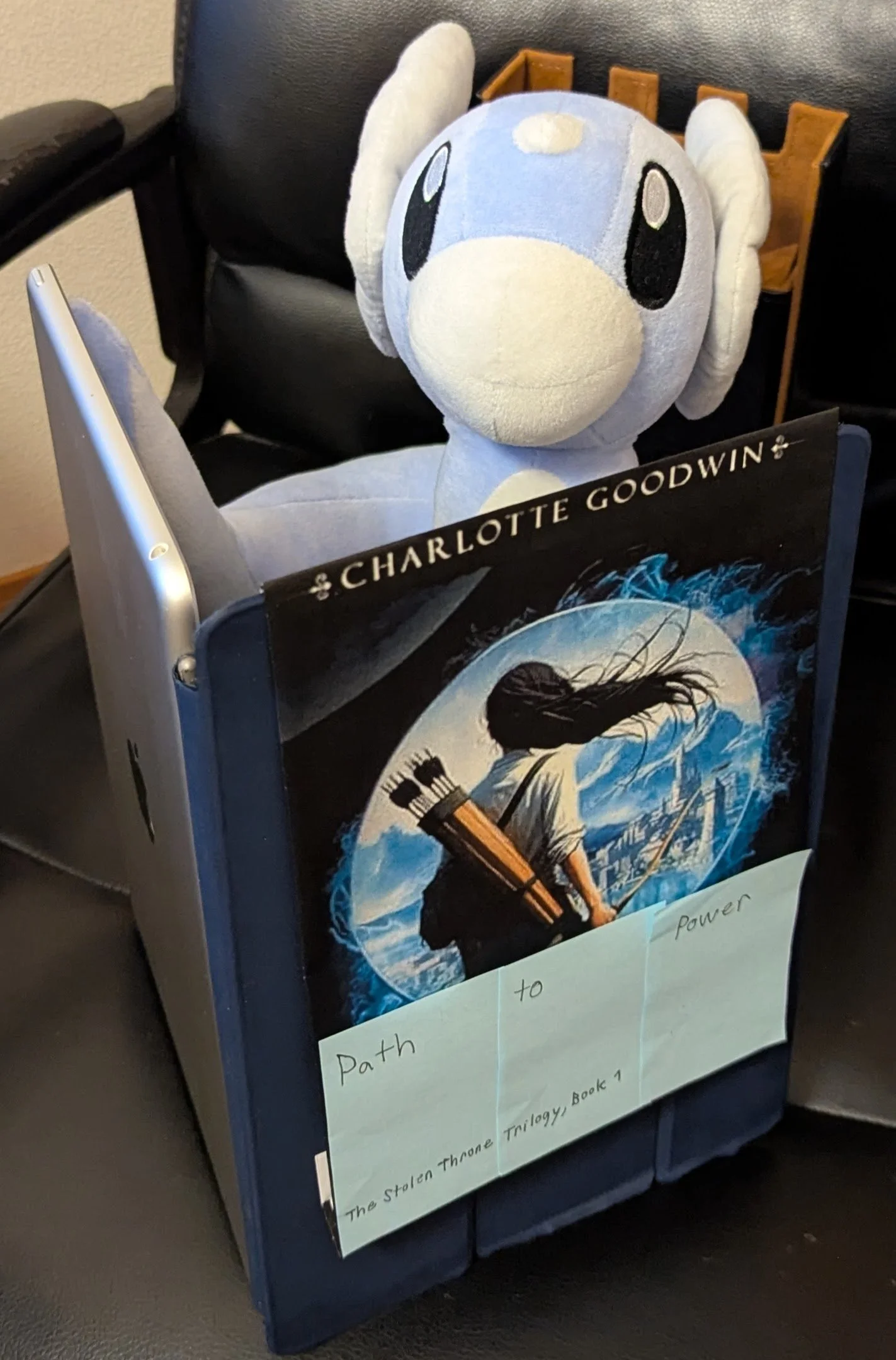
Hello, all. Welcome back to my review of the ARC copy of Path to Power, the re-release of The Queen of Vorn.
In this part, we will analyze that changes that Goodwin made between the two versions of the story. Much as was discussed with the sample of Chapter 1, these changes are not inherently bad changes. Goodwin trimmed fat and provided clarity. Rather, the problem lies in the fact that she didn’t take the edits far enough. She changed the obvious, but failed to account for knock-on effects across the narrative.
One thing I should note up front is that this part will not be a comprehensive review of Plot, Characters, or Worldbuilding. I am only going to be discussing the things Goodwin changed and the impact of those changes. If I identified an issue in the review of the unpublished version of The Queen of Vorn, but don’t mention that issue here, then that means that the issue persists and was not made better (or worse) by these changes.
Please see Part 1 if you just want my overview and rating of Path to Power. Next Tuesday, in Part 3, we’ll break down the ongoing issues of the unbalanced handling of Show Versus Tell, the impact of Goodwin revising the theme of the book, and how this ARC copy differs from the version of the book I beta-read for Goodwin back in July. Additionally, as in Part 1, I’m obliged to acknowledge that I was provided this ARC copy for free by Goodwin for the purposes for preparing a review.
Let’s get into it.
STATS
Title: Path to Power
Series: The Stolen Throne Trilogy (Book 1)
Author(s): Charlotte Goodwin
Genre: Fantasy (Epic)
First Printing: February 20th, 2026 (Scheduled)
Publisher: Self-published to Amazon
Rating: 3/10
SPOILERS
As stated in Part 1, there is little point to me warning you about spoilers, as this book is, in every way that spoilers would matter, the same book as The Queen of Vorn. If you want a review where I work around spoilers with any manner of delicacy, please see my review of the unpublished book. Here, we won’t need heavy spoilers, but all mild spoilers will be unmarked. As always, I will do my best to keep the opening paragraph of each section as spoiler-free as possible.
THE CUT CHAPTERS
The chapters Goodwin chose to cut fall into three categories:
The opening
Lila’s POV (after the opening)
Grinthy’s POV
The Opening
Early in the review process, Goodwin decided to cut Chapters 1 through 3, eliminating the introductory POV chapters from Emma, Tom, and Lila.
In principle, this was not a bad idea. Despite being character chapters, none of them contributed much to the overall narrative. The Emma and Tom chapters established traits that didn’t end up mattering to the ongoing narrative, while the Lila chapters made her out to have a bigger role in the story than she ultimately did. The Lila chapter also didn’t tell us much about the magic system or the goblin genocide, despite introducing both. Removing these chapters sped up the pacing and started the story with a hook into the plot.
However, Goodwin did not rework the following chapters (formerly Chapters 4 through 6) to account for this. We covered this somewhat with the sample chapter and how it handled backstory in a manner that doesn’t encourage engagement. The issue only gets worse as the narrative moves forward. The chapters that now serve as the introductions Emma and Tom are barely changed from the previous version - that is to say, these chapters read as though we should already understand who these characters are, as if they were introduced in earlier chapters (i.e. chapters that no longer exist in this version of the story). There’s no new information provided to characterize them, so instead of being characters with irrelevant traits, they are characters with no traits at all. What’s more, a lot of emphasis is put on the injury Tom sustained in his original introductory chapter, yet the story doesn’t explain the injury. It’s just treated as a fact of his existence, then gets healed by the Zargons. It goes from being irrelevant to being a needlessly confusing detail.
For this removal of chapters to work, Goodwin needed to completely rework the new introductory chapters (at least, everything prior to Emma and Tom arriving on Dunia) so that these could carry the introduction of both plot and character. Recycling chapters with insignificant adjustments to dialogue and narrative descriptions just wasn’t enough.
Lila’s POV
I’m all for removing Lila’s POV from the book entirely. Her chapters felt like setup for a future book, rather than something we needed to see in this book. The problem is that, without Lila’s POV (and Grinthy’s, but more on Grinthy in a second), we don’t have anything to Show us the genocide, nor any indication that she really plans to move on to killing dwarves and elves next. The genocide goes from something Goodwin was trying way to hard to be edgy about to something we just have to take her word about existing somewhere outside of the story she chose to Show us.
Goodwin knows this is an issue. She took one of Lila’s POV scenes, where she kills a vast number of goblins with a blast of magic, and turns it into something Zark watches on a monitor. The problem is that this has no weight. We aren’t experiencing the scene. We are experiencing dry commentary from a character who is supposed to be seen as a member of a logical, analytical species. Goodwin might as well have replaced every reference to genocide in the book with a line reading, “Lila is bad. Seriously. Just trust me on this. She is the villain. The heroes must oppose her.” That would have had the same weight.
Also, the removal of Lila’s POV hurts the geopolitics. In the original version of the story, when Emma and Tom had to deal with human soldiers during the last third, it was clear how those soldiers were linked (however indirectly) to Vorn and Queen Lila. Now, the geopolitics are a lot murkier. So when Emma tries to talk her way out of captivity by claiming to be the true Queen of Vorn, and then worries about the soldiers handing her over to Lila, it just doesn’t make sense. It would be like a Japanese woman walking into a random bar in the Midwestern US and expecting to be taken seriously because she’s the daughter of a yakuza boss. It’s not impossible to draw a connection between the two, but it’s not common sense.
Grinthy’s POV
Removing Grinthy’s POV is a titanic improvement. Yes, she was the only window into the goblins are victims of genocide, but even within the chapters that were supposed to frame the goblins as victims, Goodwin made them out to be irredeemable monsters. This was a key factor in the mangling of the theme. Grinthy also felt very tagged-on as a final boss for Emma to slay at the climax, so removing her isn’t detrimental to Emma’s story.
That said, without Lila as POV, Grinthy would have been our only way to experience the genocide. Thanks to removing both of them, Goodwin brought us to the state of pure Telling that we’ve already covered.
And again, Goodwin knew this was a problem, as she kept the scene of Grinthy’s family being executed and put it onto Zark’s monitors for commentary. When I saw this, I thought that maybe Goodiwn was going to put all the parts of Grinthy’s POV that made goblins sympathetic into videos for Zark to comment on … except this was the only scene she did this for. This lone scene feels like a rather bizarre and extraneous detail, an idea that Goodwin toyed with and abandoned, rather than establishment of why we should care about the goblins. It’s simply not enough to cancel out all the scenes we get from Emma’s and Tom’s POVs of goblins being monsters who eat humans and can be killed without remorse.
Pacing
Removing these chapters tightens the pace. Now, instead of Emma being abducted by goblins at the two-thirds mark, she’d taken at the halfway point. This means the plot starts much sooner.
Unfortunately, this doesn’t resolve the reason why it takes the plot so long to start: the lack of narrative momentum. Everything prior to Emma being abducted is still a lose collection of isolated events, with both plot and character conflicts resolving in the span of one or two chapters. The lack of consequences from of these isolated sequences to the next keeps any narrative momentum from building and causes the story to effectively reset every few chapters. This would be fine if these isolated bubbles built character, but outside of Tom and Garrad’s relationship, there’s no meaningful characterization to be found in these chapters.
Cutting Was Not Enough
I’ve stated this a couple times at this point, but just to make sure we’re all clear on this: cutting chapters was not a bad idea. The issue is that Goodwin couldn’t be bothered to make additional changes. She needed to Show us the genocide from Tom and Emma’s POV. She needed to Show us evidence that the genocide would spread to elves and dwarves. Having Zark delivery dry commentary on some videos simply wasn’t enough. We either needed new scenes or a reworking of scenes she kept in order to establish the necessary information.
EXPLAINING CONTRIVANCE
At a couple of points in the narrative, Goodwin does make edits in order to convey vital information. The issue is that these are very small patches that don’t fix the underlying problems. I’ll give examples of the two most obvious ones to illustrate this problem.
Going to See the Elves
In the original version of the story, the time spent with Arndal feels like a complete waste of time. Emma and Tom spend a few chapters with him before Arndal decides that Tom clearly needs to see the elves, information that is implied to have been beamed into his head by Zark. At the time, I commented on how contrived it was that the Zargon’s couldn’t have figured this out and sent Emma and Tom to the elves from the start.
In this version, Goodwin explains this by having Zark embed the necessary information about the elves into one of Emma’s two training downloads. Emma then remembers this pivotal information at the exact same point in the story.
That’s right. Nothing about the narrative was actually changed. The only difference is that Goodwin confirms that the Zargons should have always had access to this information (because why would Zark sneak the information into Emma’s download unless she already knew it would be relevant) and have the suggestion of going to the elves come from Emma instead of Arndal … while also implying that Zark still beamed information into Arndal’s head.
This is not a solution. Arndal is still irrelevant (for this specific aspect of the plot, at least - more on him momentarily). The advancement of the plot after multiple chapters with him is still arbitrary. If anything, Goodwin made the contrivance worse by increasing the amount of deliberate action undertaken by the representative of the Zargons.
Escaping the Camp
In the original version of the story, Goodwin has Tom, Garrad, and Eskalith be captured by soldiers in one chapter, only to have them be free in Tom’s next POV scene. An explanation isn’t provided for several paragraphs.
In this version, the explanation is provided at the start of that next POV scene.
So, again: nothing is solved. Goodwin treats the capture of these characters as a cliffhanger, promising an epic escape, and then cuts to them already having escaped … because magic. She then expects us to believe that magic can’t solve all remaining problems in the story, despite it apparently being so powerful that it makes it unnecessary to Show us an escape. She should have Shown us the escape, both because she went out of her way to set it up and because doing so would allow her to convincingly demonstrate the limits of magic.
GENRE WASTE
I am still firmly of the belief that Goodwin’s insistence that her book combines Science Fiction with Fantasy is a coping mechanism for her inability to conceptualize the mystical (something she has loudly broadcast on Twitter as a form of engagement bait). However, in this version of the story, she manages to hide the hand of the author. No longer to we get that cringeworthy sequence of atheist soapboxing. Without that, the insistence that magic is based on science can be taken at face value. The only way one can tell the genre choice is a coping mechanism at this point is if one looks at Goodwin’s Twitter, which the majority of readers won’t. This is such a simple change, but it does a lot of good for immersion.
Unfortunately, this doesn’t correct the issue of the Science Fiction elements being needless bloat for this narrative. Goodwin doesn’t do anything with that genre. Sure, maybe the Zargons will play a larger role in later books, but setup for later books shouldn’t be a distraction for this one.
Which brings me back to my earlier remark about Arndal feeling redundant. It occurred to me, while reading this ARC copy, that every role fulfilled by the Zargons could instead have been fulfilled by Arndal.
He is a wizard who opens portals. He could have been the one to rescue Emma and send her to Earth.
He is aware of what Queen Lila is up to. He could have summoned Emma back to confront the threat.
It’s not like the worldbuilding gives us any reason why he couldn’t do these things. The only piece of information Arndal would need would be something to tell him that Queen Lila is also from Earth, and there he could therefore train someone else from Earth (Tom) to oppose her.
Am I saying that Goodwin absolutely had to drop the Science Fiction elements and make this pure Fantasy? No, but given how little she does with the Science Fiction, dropping those elements would made for a much more focused narrative. It would have meant that she had fewer balls she needed to juggle. Also, given the few edits she was willing to make in this re-release, the changes she’d need to make to simplify this genre were well within her capabilities. She would have gotten so much more impact out of removing the Zargons and making Arndal the one who saved Emma and now summons her back than she did from any of the other changes she chose to make.
If Goodwin wanted to keep the Science Fiction, then more was needed. She should have made it relevant. As it stands, her efforts to use Guardians of the Galaxy as a comp title (which mainly seems to be in association to the Offspring Trilogy, though I have this vague memory of seeing her reply to someone else’s Tweet more recently to make this same comparison about Path to Power) ends up being so off-base that it veers towards false advertising.
AT LEAST IT’S NOT AN APOLOGETIC FOR GENOCIDE
Next Tuesday, we’ll wrap up this review series by discussing the ongoing issue with Show vs. Tell in this book, as well as the changes to the theme. The former is an issue that, quite frankly, wasn’t fixed. It will be less a comparative analysis and more a discussion of why the changes Goodwin did make don’t correct the issue. The latter, though, is the only change the unambiguously improves the quality of the book, even if it’s not by much. We’ll also cover which changes Goodwin had already made by the time of the beta-read version I saw in July and which ones were introduced after that version. I personally found the divide between changes to be rather telling.
Thank you all for joining me today. Please remember to subscribe and share if you liked what you read here. Take care, everyone, and have a good week.