Red Dragon (Part 4 - Prose & Tone)
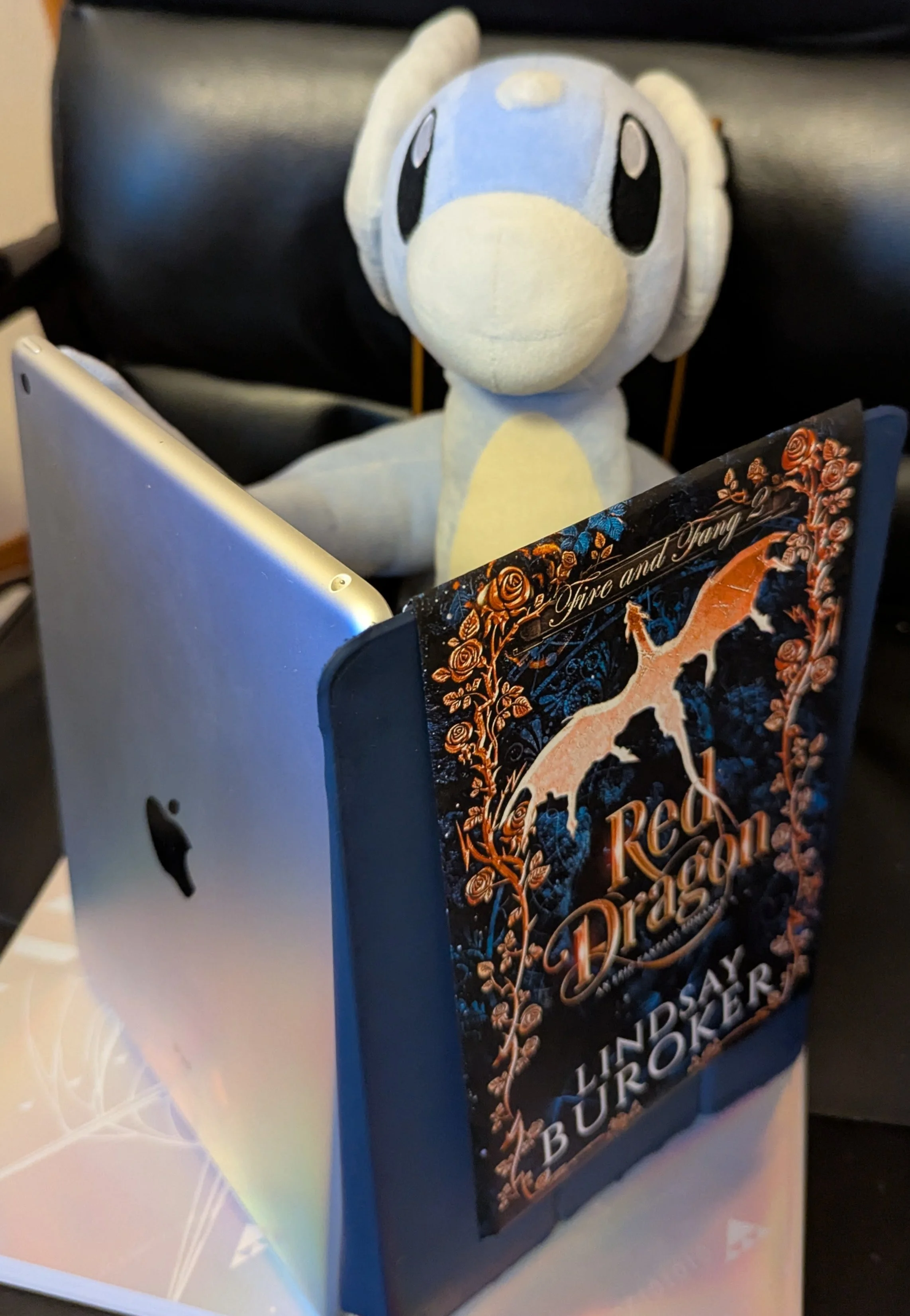
Hello, all. Welcome back to Part 4 of the analysis of Red Dragon, the second book of Fire and Fang.
Today we’re just going to be discussing the prose and the knock-on effect that prose has on the tone of the story. If you’re just looking for the overview, please see Part 1. A plot analysis is covered in Part 2, while the characterization, worldbuilding, and romance elements are discussed in Part 3.
Once you’re ready to go, let’s fly.
STATS
Title: Red Dragon
Series: Fire and Fang (Book 2)
Author(s): Lindsay Buroker
Genre: Fantasy (Romantasy)
First Printing: November 2025
Publisher: Self-published to Amazon
Rating: 6/10
SPOILER WARNING
Mild spoilers for Red Dragon will be included throughout this review, through I will keep the first paragraph of each section as spoiler-free as possible. Heavy spoilers will be confined to clearly labelled sections.
Heavy, unmarked spoilers for Sky Shielder will be provided throughout this review. I’m also going to assume that you’ve already read that review series, though it isn’t necessary to do so to understand this review.
PROSE
The prose of Red Dragon is consistent with that of Sky Shielder. There’s a lot of repeated information, particularly repeated motivations. There’s a lot of quippy banter being tossed about. The stormer love of fruits and sweet things, particularly baked goods, feels like a running gag at some points.
A lot of this feeds into the tonal issues of this story, which I’ll get to in a second. For now, I want to call attention to one other point: narrative voice.
The narrative voices of Vorik and Syla are indistinguisable. If the POV shifts while the two of them are in a scene together, it gets very hard to keep track of who the actual POV character is supposed to be. There were times where I actually forgot who the POV character was, only to be surprised when the scene shifted to follow the one who I didn’t think was the POV. Sure, there are times when context clues clear things up (brooding on personal motivations, feeling sexual arousal, combat), but without those reminders, these two are effectively the same.
This isn’t a deal breaker. Buroker at least avoids the Women Writing Men missteps we covered in the last book. It just would have been nice to get a little more to distinguish between them, particularly when the narrative describes other characters (because we know, from the dynamics between characters, that Vorik definitely doesn’t think about the secondary characters in Syla’s orbit the same way that she does).
TONE
The tone of Red Dragon - and, by extension, the Fire and Fang series - is lighthearted and quippy, with the dialogue oversaturated with witty banter. I don’t hate this in principle. I’m just starting to feel like it doesn’t mesh well with this particular series.
Where It Did Work Well
For those not aware, Magnetic Magic is Buriker’s previous series, an Urban Fantasy set in modern-day Seattle. The “were-wolf heroine” is the series, Luna, is a “middle-aged, divorced empty-nester” who is forced by circumstances to reconnect with the pack she left behind half a lifetime ago. At the same time this happens, a charming treasure hunter, Duncan, comes into her life. The series follows the pair as they overcome the traumas of their past and reach a state of self-actualization.
Something that must be emphasized in all of this is that this was a personal story with small stakes. The absolute highest that the stakes got were:
Luna’s and Duncan’s lives were in danger at various points and for various reasons.
A various points, the lives of Luna’s friends and family members were also threatened.
Luna’s pack was in danger of being taken over by someone who wasn’t a competent leader.
Luna’s pack was in danger of losing their ancestral lands due to an underhanded real estate scheme.
A local gang threatened to depreciate property values.
In Duncan’s backstory, he was created to build an army of werewolves to serve Lord Abrams and conquer the world. (This one isn't small-scale, but it’s handwaved in such a manner that we understand it’s only meant to be backstory.)
Luna’s life was in danger of being upended due to either losing her job or being exposed as a werewolf.
There’s the hanging question of Luna having another child despite being in her forties.
All of these can certainly be dire situations used to tell stories rife with tension and drama … but in the grand scheme of things, these are blips. They are so small scale that the supernatural world of Seattle will keep on spinning regardless of what happens to Luna, Duncan, and those associated with them. Frankly, outside of the pack leadership and gang violence issue, the supernatural world wouldn’t even notice if the protagonists were wiped from existence. The fate of the world is not in the balance. The conflicts are personal ones that shape the future of specific characters.
Because of the conflict is personal, it’s possible for the stakes and tension to survive even if the tone is lighthearted. This is doubly true if the narrative is told through the 1st Person POV of a single character (in this case, Luna). The quipping, the banter, and the jokes can be justified by characterization. So when chocolate becomes almost a running gag within the story, it doesn’t feel like the characters isn’t taking things seriously. It feels like Luna is coping with stress as best she knows how.
One particular detail I should highlight is Magnetic Magic’s handling of sexual discussion. While the discussion of sex does feel excessive at parts, Buroker redeems it by making sex part of the stakes. Not every bit of sexual discussion is directly tagged to the issue of Luna maybe having another child, but enough of it is that it creates a clear association and justification for it.
Why This Doesn’t Work in Fire and Fang
Setting the Tone
There are a few factors within Fire and Fang that give it the same lighthearted feel as Magnetic Magic.
First, much like the ongoing focus on chocolate that Luna has, Vorik (and, by extension, the stormers) has an obsession with sweet things. They are constantly distracted by fruits and berries, and the mere mention of cobblers or other baked goods will derail their train of thought. Luna thinks that she can defuse diplomatic tensions with visiting stormer chieftains by offering to have her castle’s kitchens bake pastries for them - and she’s right, at least insofar as the lower-ranked dragon riders are concerned. This makes sense within the world and for the characters involved, of course. It’s the effect that it has in reducing tension that stands out about it.
Second, there is the discussion of sex. Sex is brought up very often, very casually, and often very crassly. In and of itself, this doesn’t affect the tone. Part of the gritty vibe of A Song of Ice and Fire (not the only part, or even the most important part, just a part) is because of how sex is discussed. Then there’s The Empyrean: while I find the various sexual comments rather excessive and off-putting, Yarros does at least confine it to moments when the stakes are low. What’s different in Fire and Fang is that characters will bring up sex at almost every available opportunity, regardless of the stakes at play. Adding to the weirdness is the amount of interspecies banter about sex, with humans and dragons discussing body parts in roundabout terms to account for differing anatomy.
Both of these two items contribute to the third issue: the amount of banter. A lot of the dialogue in Red Dragon feels stretched to accommodate some witty side-tangent. Since all of these discussions involve Syla and/or Vorik, this is partially justified by individual characterization and shows a measure of chemistry (similar to what we saw between Luna and Duncan). The problem is that this excuse can’t cover every single character whom Luna and Vorik banter with, yet none of these other characters ever have trouble keeping up. It has a similar effect to the Whedonistic humor of the MCU: a constant defusion of tension.
Tonal Confusion
If Fire and Fang were purely about a princess trying to prove herself to a dragon and going on a treasure hunt while competing with a handsome rogue, I think this light-hearted tone would be great.
Tiny problem: lots of people have died, are dying, and will continue to die (or, as we will get into next week, be enslaved).
Syla is going on this treasure hunt to repair a shielder, and she has to do so because the shielders are the only thing protecting the Garden Kingdom from being pillaged by the stormers (in the short term) and turned a Death World like the rest of the setting (in the long term).
Vorik is trying to stop her because the stormers can no longer survive in aforementioned Death World and see no other option except to pillage the Garden Kingdom.
Sky Shielder began with Syla’s entire nuclear family being slaughtered, thereby thrusting the burden of the throne upon her. That was maybe 3 weeks before the events of Red Dragon (there’s a 2-week timeskip between books, and I don’t think Sky Shielder covered more than a week). Their deaths are also invoked again in Red Dragon to emphasize the emotional strain of Syla’s current situation.
This book isn't an Epic Fantasy just because of the setting. The stakes are, quite frankly, epic. So when characters are quipping about fruit and oral sex, it doesn’t read like we’re supposed to be having fun. It reads like no one is taking the existential threats - existential threats that they themselves repeatedly acknowledge - seriously.
This could still be fine if the narrative acknowledge the disconnect. Spider-Man gets away with his incessent quipping, even in the face of world-ending threats, because everyone, including himself, acknowledges that his humor doesn’t fit the situations he’s in. He does it to manage his stress and to keep his opponents off-balance. That’s not what we get here. At most, there are a few characters who do treat the situation with the gravity it demands (namely, Jhiton and Dolor), but they treated as dour outliers, rather than the only sane people ina world where no one else takes things seriously.
It’s for this reason that I found Red Dragon a bit hard to get through. If the POV characters aren’t taking their situation seriously, why should the audience? Again, this would be fine in more personal or outright character-driven novel. In an Epic Fantasy with epic stakes, it makes it hard to remain engaged with the story.
THOSE EXISTENTIAL STAKES
The tone is not the only aspect of the story that I feel doesn’t quite align with the existential stakes. A few decisions made by the characters (particularly stormer characters) don’t quite line up to the reality of their situation. While I don’t think this is something that breaks the story, it does makes things rather confusing at some points. We’ll get into this matter next Wednesday, February 11th, when we wrap up the review of Red Dragon with a Spotlight Analysis of the geopolitical landscape and how the characters’ behavior reflects (or, rather, fails to reflect) that landscape.
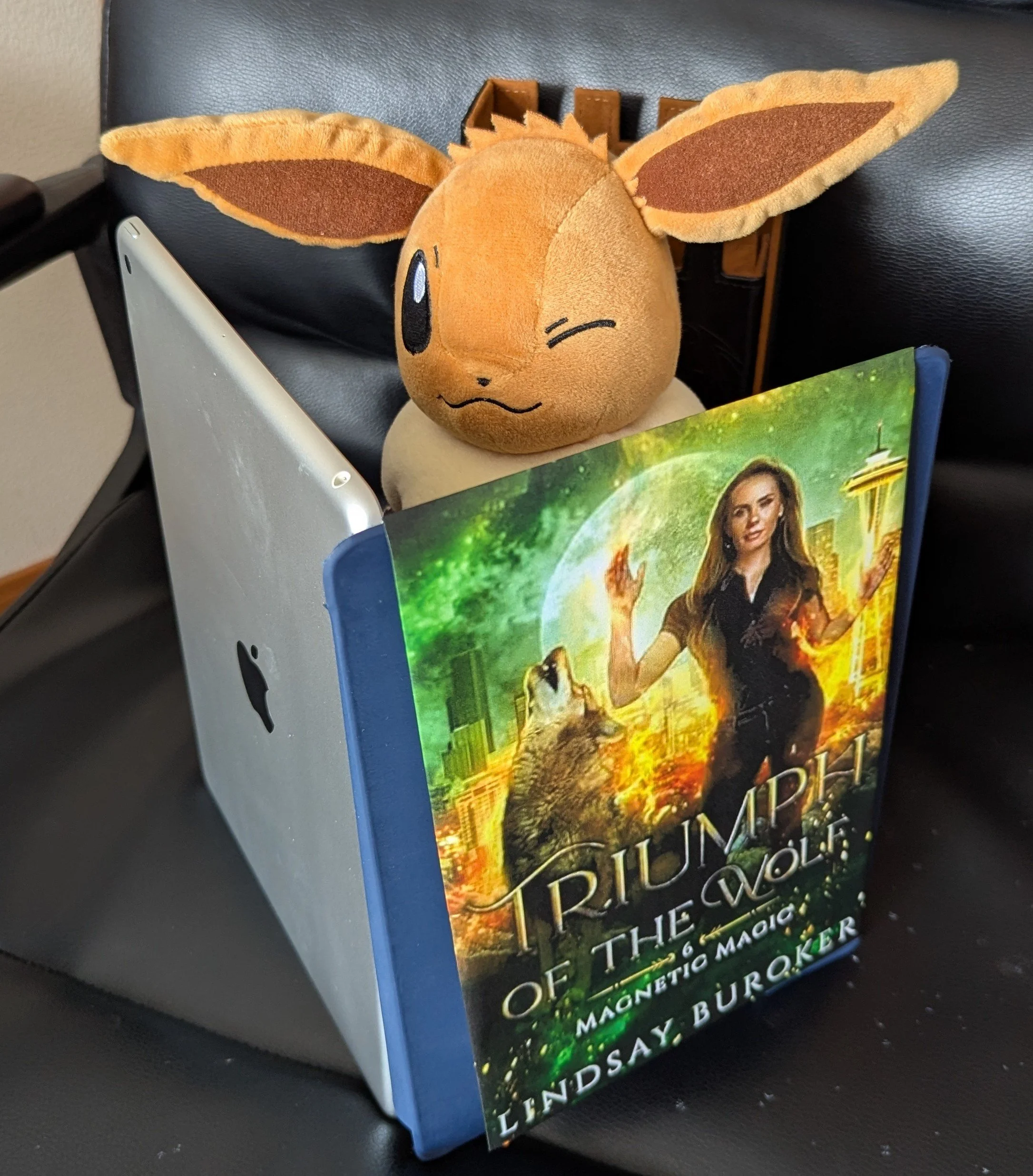
If you want to read about more of Lindsay Buroker’s work, we’ll be reviewing the last book of the Magnetic Magic series, Triumph of the Wolf, this upcoming Friday and Sunday. I hope you’ll join me for it.
Thank you all for stopping by this week. Please remember to subscribe and share you enjoy what you read here. Take care, everyone, and have a good week.
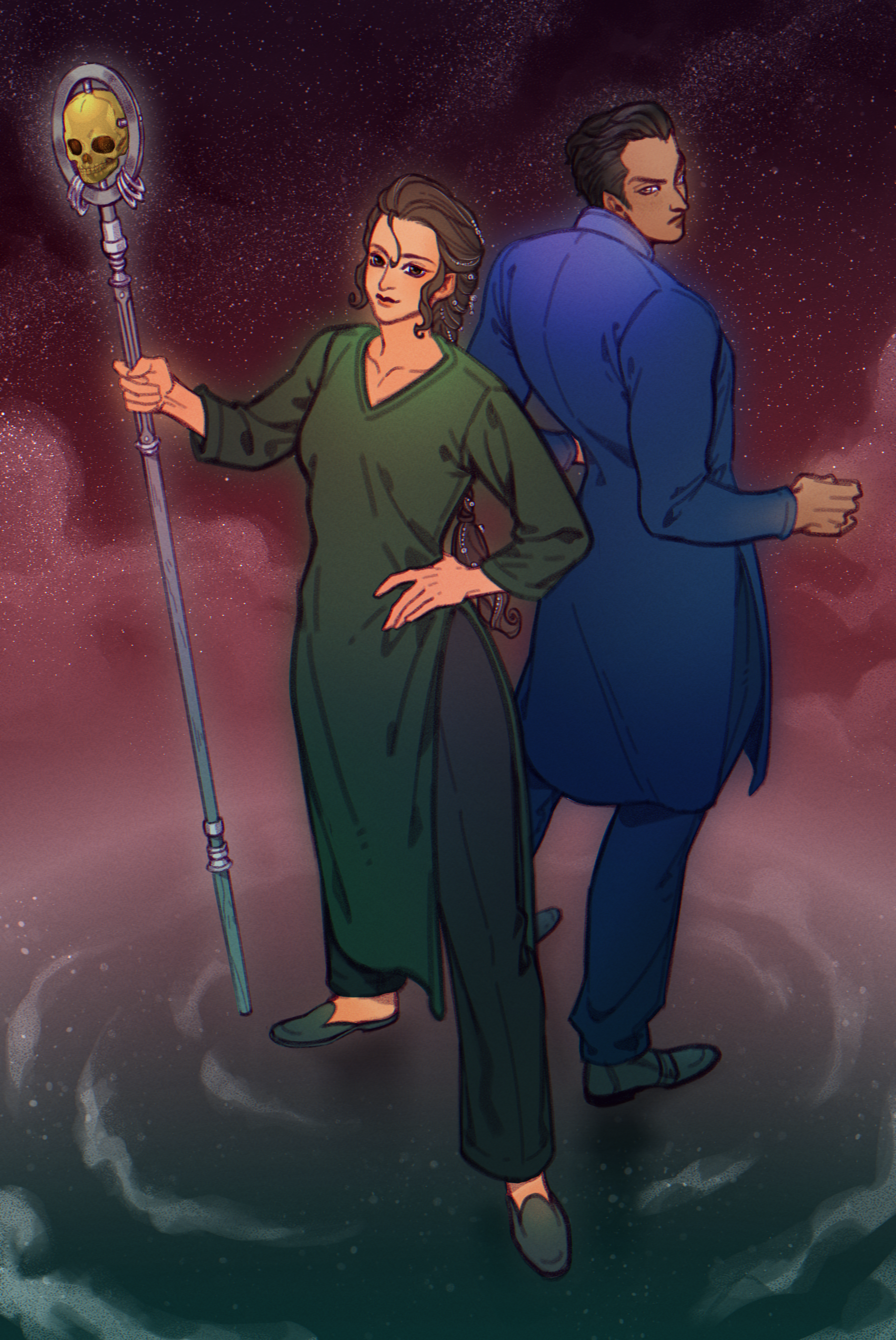
Volume I of my first serialized Romantasy novel, A Chime for These Hallowed Bones, is now premiering over in Tales of the Five Worlds!
Kabarāhira is a city of necromancers, and among these necromancers, none are more honorable or respected than Master Japjot Baig. Yadleen has worked under him since she was a girl, learning how commune with bhūtas and how to bind these ancient spirits into wights. Her orderly world is disrupted, however, when a stranger appears with the skeleton of a dishonored woman, demanding that her master fabricate a wight for him.
To protect her master from scandal, Yadleen must take it upon herself to meet this stranger’s demands. Manipulating the dead is within her power, but can honor survive in the face of a man who has none?
Chapters 1 and 2 are now available! I hope you’ll join me on this new adventure.