Perihelion (A Ravenor Short Story)
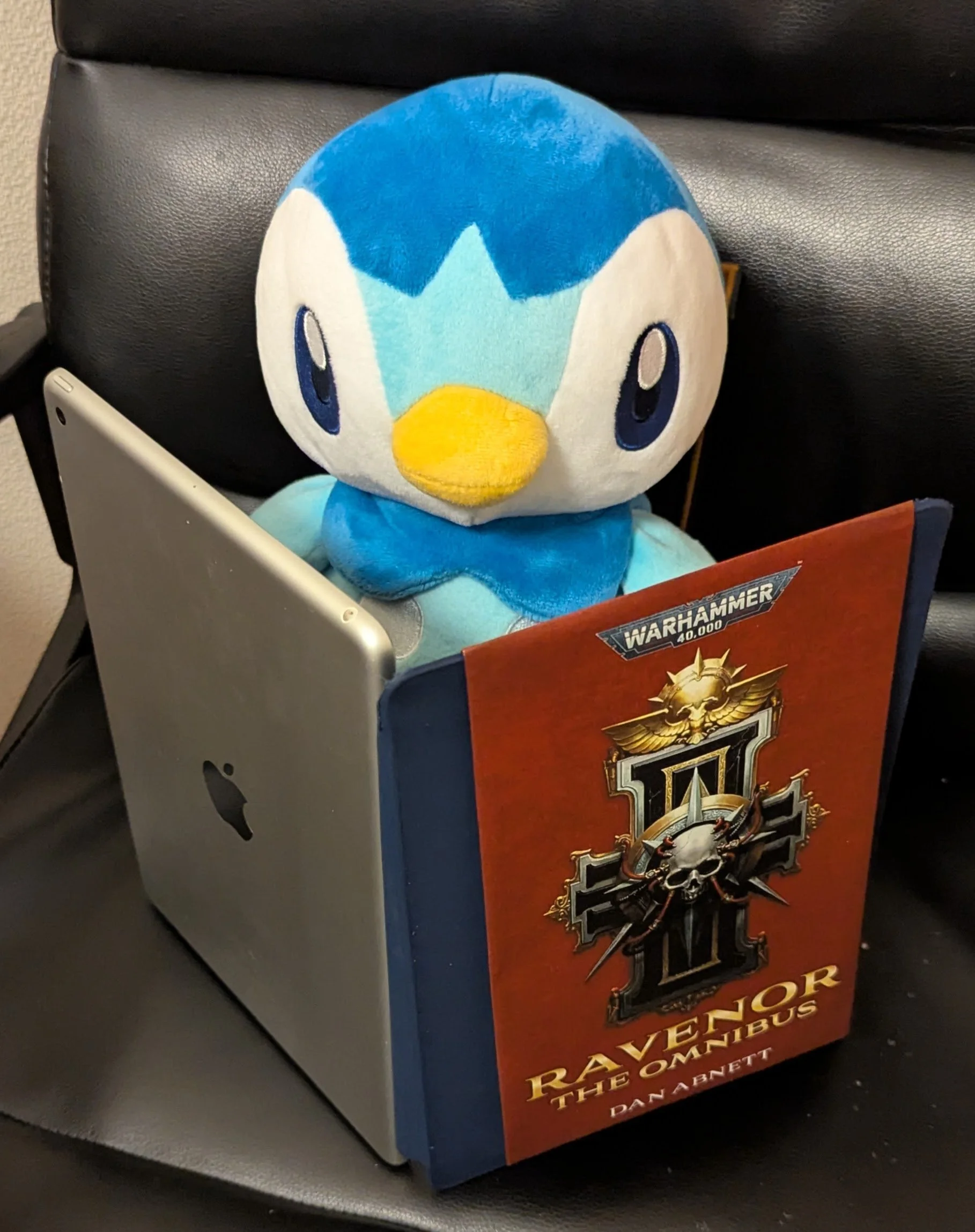
Hello, everyone. Thank you for joining me for the review of the last short story from Ravenor - The Omnibus.
Despite being in Ravenor’s book, this is actually an Eisenhorn story. He’s the POV character, and the story ends on the note that seems to be setting up more adventures for him (though I don’t feel like it’s necessarily pointing towards either “The Keeler Image” or The Magos, despite both being the next Eisenhorn stories I’m aware of within the timeline). That isn’t to say that it doesn’t fit in the omnibus. The epilogue of Ravenor Returned left the fate of the titular inquisitor up in the air. In this story, set several decades later, we learn what happened to him in the aftermath.
Gear up, everyone. Let’s drop back into the grim darkness of the 41st Millennium.
STATS
Title: “Thorn Wishes Talon”
Series: Ravenor
Author(s): Dan Abnett
Genre: Science Fiction (Space Opera)
First Printing: November 2012
Publisher: Black Library (Games Workshop Publishing)
SPOILERS
Both minor and heavy spoilers for “Perihelion” will be provided throughout this review. I will try to keep the first paragraph of each section as spoiler-free as possible. Heavy spoilers will also be confined to clearly labeled sections.
Spoilers for the Eisenhorn and Ravenor novels will be provided during this review. These will not be marked. Please see my reviews for those prior works if you’d like a little more context, though this won't be necessary to understand this review.
TIMELINE
“Perihelion” is set in 470.M41, 65 years after the epilogue of Ravenor Rogue (405.M41) and 5 years before The Magos (475.M41).
STORY
Wishing for the chance to see Ravenor again, Eisenhorn infiltrates an inquisitorial symposium that is intended to assess whether certain literature recovered from a private collection is heretical, knowing that Ravenor will attend this gathering. What is intended to be a discrete attempt to make contact turns bloody when a psychic attack causes attendees to turn on one another. As he attempts to leave the scene, Eisenhorn makes psychic contact with the attacker, thereby learning the name of Grael Ochre, the Yellow King, and something called Orpheus that Ochre is focused upon.
RATING: 8/10
If I were to rate this story a wholly isolated work, I would give it a 6 or 7 out of 10. It follows in the same mold as the other Eisenhorn short stories: a glimpse into the minutia of the setting, coupled with a decent action sequence, but nothing particularly profound.
What makes this story particularly rich is the context. More specifically, it’s the character work bound up in that context. This story is the first contact Eisenhorn and Ravenor have had in more than 70 years, and while the time apart has not affected Eisenhorn’s perspective on their relationship, Ravenor’s perspective has shifted - and for good reasons.
PLOT
Setups (Heavy Spoilers)
To my knowledge, this is the earliest mention of the Yellow King or Orpheus within the timeline (but, again, I’m assuming that I’ve read all of the Eisenhorn and Ravenor stories that are available, which may not be the case). These terms are effectively mystery boxes at this stage, intended to tantalize the audience. Given that he Magos put in the legwork to make sense of the Yellow King as a threat without this story, I don’t think that’s necessarily an issue. This isn’t like how “Thorn Wishes Talon” is required reading to fully appreciate the Fratery’s presence in Ravenor Returned.
That said, one element that feels a tad off comes up when Eisenhorn and Ravenor finally get a chance to speak. Ravenor tells Ravenor that the Yellow King’s attack is about him. It’s an effort to goad Ravenor into using his psyker powers so that the Yellow King’s allies can get good sport out of killing him, with the clear implication that they won’t bother killing Ravenor otherwise. This feels rather odd to me. I can fully believe that Ravenor would make enemies with someone who’d want to kill him under specific conditions, but all of his enemies are aware that he’s a competent inquisitor even without the direct use of his psyker powers. He’s a threat to the Cognitae (which The Magos will confirm to have an association with the Yellow King) and other servants of Chaos either way. The idea that he’d get a free pass if he his head just doesn’t line up. At least when Molotch arranged overly elaborate means to kill Raveor in the trilogy, there were practical reasons for it.
Consequences
In this story, we learn that Ravenor suffered the following consequences for going rogue at the end of his trilogy:
15 years of being under investigation
Removed from active service
Prohibited from using his psyker abilities beyond the bare minimum needed to operate his life support chair
Frankly, a slap on the wrist, considering the mess he got himself into. The Inquisition has done a lot worse to people for far less.
However, that’s not to say that Ravenor got off lightly. Which brings us to …
CHARACTER (Heavy Spoilers)
When Ravenor and Eisenhorn last met in “Thorn Wishes Talon”, the two were wary of one another, but not hostile. Eisenhorn had fully embraced his status as a radical. Ravenor was not comfortable with Eisenhorn openly using a dæmonhost as a weapon. yet he was still happy to work with his former master.
Eisenhorn is still wary of Ravenor after all these years, still committed to defending the Imperium as a radical. Ravenor, though, is no longer happy to see Eisenhorn. The long decades away from active service appear to have robbed him of his motivation, to the point that he no longer bothers to maintain the paint on the exterior of his life support chair. When he speaks with Eisenhorn, his main concern seems to be telling Eisenhorn to leave before they are seen talking to each other, though he does at least try to joke with Eisenhorn.
The real gut punch of this interaction, though, is the reveal that Ravenor was given two options for his punishment. Retirement from active service and swearing not to use his psyker powers was a choice. The other punishment he was offered was to take charge of hunting Eisenhorn down. Ravenor gave up any hope of salvaging his career and returning to active service out of loyalty to his master. Perhaps I’m reading too much into this, but perhaps the reason Ravenor is so hostile to Eisenhorn here is because, if Eisenhorn gets caught while trying to see him, it will make his sacrifices meaningless. A little frustration is understandable in this situation.
THE GALAXY KEEPS ON SPINNING
“Perihelion” is a good example of how this setting designed to accommodate a tabletop wargame is capable of some deep character work. It shows us two characters with a long history and the scars to come with that history. I’ve heard that Ravenor and Eisenhorn encounter each other again in the Bequin Trilogy (which, yes, I will be reviewing starting next month). After this encounter, I am really looking forward to that reunion.
Thank you all for stopping by. Please remember to subscribe and share if you enjoyed what you read here. Take care, everyone, and have a good week.

Looking for more stories like “Perihelion”? Check out my free novella, The Unbottled Idol, available over in Tales of the Five Worlds!
Mohsen Yavari's task within the Imperial Inquisition of the Kimian Empire is simple: monitor the gods' activities in the mortal world. However, when a diplomat is killed by a goddess, a maverick inquisitor recruits him for her investigation. Their search for answers will lay bare sinister truths, with a child’s soul hanging in the balance.
Join me on this adventure of intrigue, martial arts, and divine assassination!