Runebreaker (Part 2 - Romance)
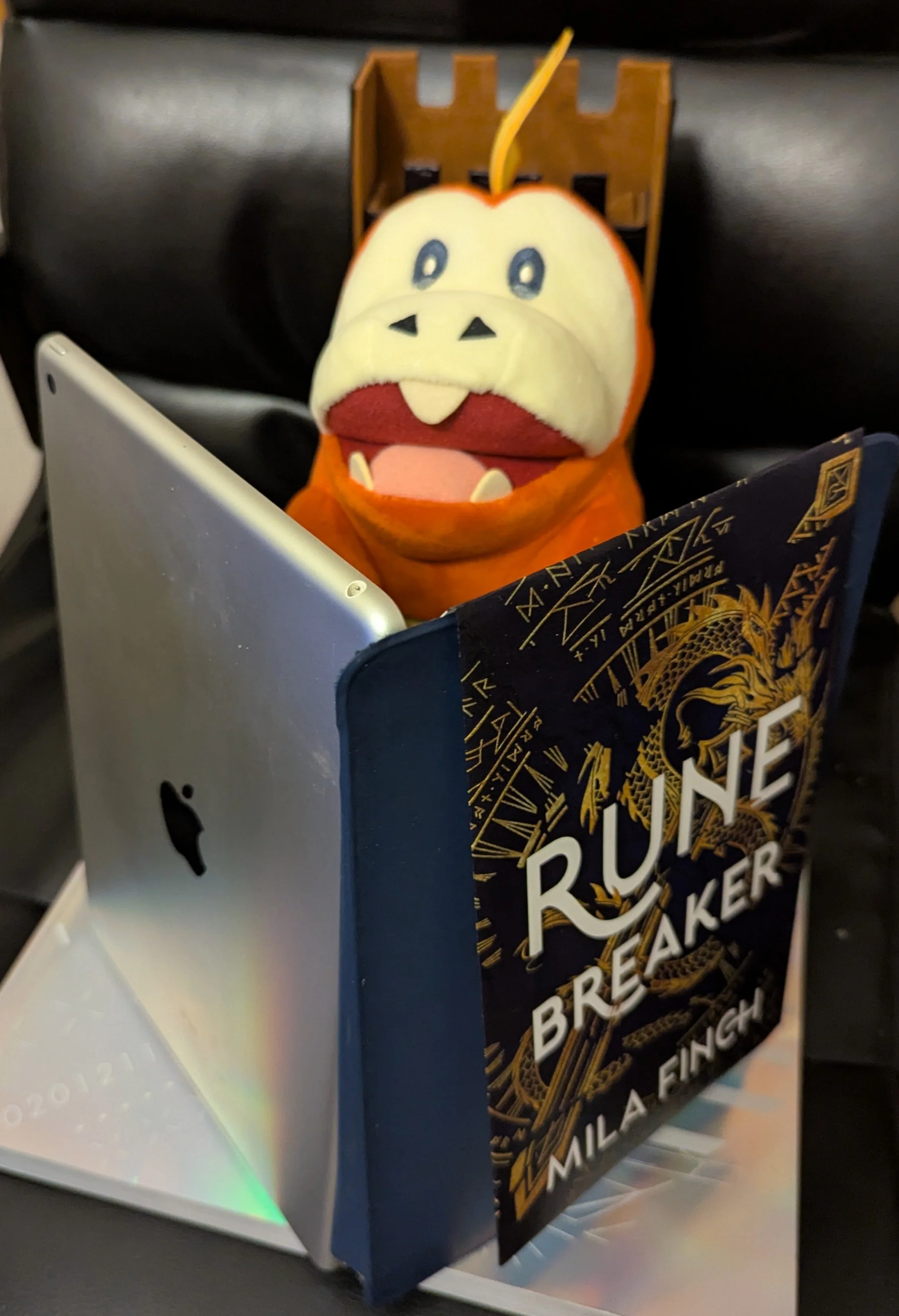
Hello, all. Welcome back to the review of Runebreaker, an indie Romantasy by Mila Finch.
Last Sunday, we did the overview for the book. Now it’s time to get into the weeds of the analysis. We’re going to kick things off with the breakdown of the Romance. This is, after all, a Romantasy that leans so far into the Romance that the Fantasy is window dressing. If the Romance doesn’t work, the story can’t function.
Let’s break some bonds.
STATS
Title: Runebreaker
Series: [Untitled Trilogy] (Book 1)
Author(s): Mila Finch
Genre: Fantasy (Romantasy)
First Printing: January 2026
Publisher: Self-published to Amazon
Rating: 0.5/10
SPOILER WARNING
Throughout this review, there will be mild, unmarked spoilers for Runebreaker. I will do my best to keep the first paragraph of each section as spoiler-free as possible. Heavy spoilers will be confined to clearly marked sections.
ROMANCE
Just to kick things off, let’s flash back to that note tagged onto the end of this book’s premise:
Runebreaker is a steamy, fast-paced romantasy with forced proximity, he-falls-first tension, and captive/captor dynamics perfect for adult fans of Jennifer L. Armentrout and Sarah J. Maas. It features a feral, morally gray hero, a twenty-five-year-old heroine with a dangerous gift, mating bond tension, and immersive world building. This is book #1 of a trilogy.
This book’s Romance is a cookie-cutter story written entirely about tropes. Every beat was predictable. It was written to check a list of boxes.
In and of itself, this isn’t a bad thing for a Romance. Repetitive storytelling, comfort food that hits a predetermined set of beats, is part of the appeal of a lot of Romance stories. I think it’s one of the reasons why Romantasy should be divorced from Fantasy, where such predictability is more of a flaw than a boon, but otherwise, it makes sense in terms of giving the audience what they want. I suspect a major reason why this book is rated so highly on Amazon (out of the 1560 ratings at the time of writing this, 75% were 5 stars, and the average score was 4.7) is because these tropes scratched a specific itch for people who liked them.
There’s a flip side to this, though: repetitive storytelling is not an excuse for lazy or incoherent storytelling. It does not mean that boxes can simply be checked without connecting the elements in a coherent manner. Runebreaker could have checked off tropes while telling a cohesive story that stands on its own without trope marketing. Not doing so was either a deliberate choice or a failure in developmental editing.
The One Good Thing
Aelie and Karios meet three times before the inciting incident (with the third time technically being the lead-up to said inciting incident).
In the opening chapters, Kairos has a chance to apprehend Aelie as she flees a fae noble’s estate after robbing the place. He chooses to let her go, despite her obviously being the suspect in a robbery that he knows just took place.
A little later, Kairos has the chance to identify Aelie to city guards, yet stays silent.
He walks her to her execution after the dam breach incident, during which, he nudges her towards breaking the rune that keeps him prisoner.
The sexual tension doesn’t kick in until after the inciting incident. The clear implication is that there is no attraction between them prior to Aelie freeing Kairos. This begs the question, though: why did Kairos help her? This isn’t presented Love at First Sight thing, and he had no other reason to help her, so what was the angle?
This is one of the few moments in the story where Finch actually does successfully connect the dots on seemingly contradictory ideas. Kairos absconds with Aeilie, making it clear that he intends to keep her rune-breaking power to himself. On my first read, it gradually dawned on me that maybe this all started because Kairos realized Aelie could free him back during their first encounter. He was simply biding him time until the ideal opportunity presented itself.
As it turns out, that is exactly what Finch intended. Kairos later provides exposition about how word of Aelie’s power was spreading even before he identified her in the opening chapters. There were reports of runes failing across the city. So when he encountered Aelie while alarms for a robbery were ringing, he connected the dots. From there, he was doing what he could to keep her alive until he could arrange a moment for her to break the rune that bound him.
I really liked this. It tied the start of the relationship into the worldbuilding, rather than just taking attraction between them as a given.
How It Backfires
… at least, I did like it, until Finch took the attraction between them as a given, without playing catch-up.
There’s no moment where these two grow closer emotionally and bond from that. As we’ll get into when we discuss characters, Aelie has no traits that could justify Kairos being attracted to her. We go from a relationship based on convenience to the pair panting at each other. It feels like Finch originally wrote the book with heavy sexual tension from the start, then simply incised out all the tension before the inciting incident. The shift from a bond built on necessity to one build on sex produces severe whiplash.
Pure Fantasy
Aelie and Kairos do not grow together. There is no emotional development. Their relationship isn’t challenged. There is nothing to it but lust, Kairos showering Aelie with presents, and the two of them validating each other.
This is particularly frustrating because, despite how little substance there is to the plot, this book is fairly long. There was a lot of time to explore who these two are as people. The tropes could have been checked off while still having them grow and develop together.
At a certain point, it just got boring. I’m sure that people who turn their brains off and just ride the tropes will enjoy it, but we shouldn’t need to turn our brains off.
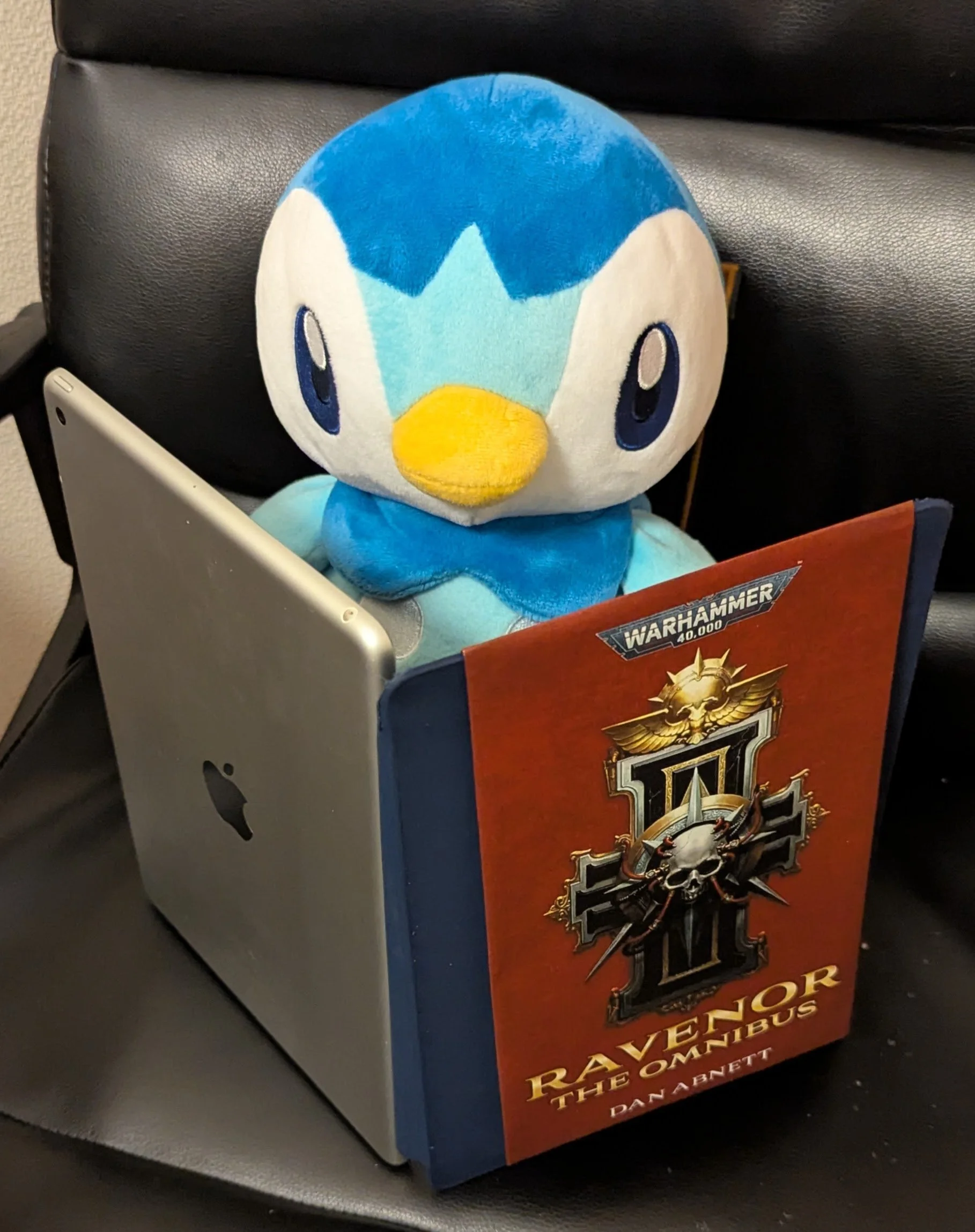
Even Abnett’s Warhammer 40K novels have better Romance than this. Those relationships are mere footnotes to add some human drama, but they are least make sense.
Kara and Patrik started as a patient-doctor relationship with clashing ideologies and evolved into romance as both were changed by the experience.
Eisenhorn’s doomed romance with Alizebeth was a background detail, but they had great chemistry and a strong working relationship that made it easy to understand how they could have been a couple if he wasn’t a psyker and she wasn’t a blank. His failed marriage to Crezia is another background detail that likewise has a sense of chemistry and a good explanation for how they got together in the first place.
The failed marriage between Valentin Drusher and Germaine Macks is another example of clear chemistry between characters and enough information to understand how they could have connected in the first place.
The relationships between Ravenor and Arianhrod and between Harlon Nayl and Angharad Esw Sweydyr are the closest example I can think of to what we see in Runebreaker. We are given nothing to explain how they are together outside of sexual attraction. The main purpose of these relationships is to call attention to everything Ravenor has lost (since Angharad is Arianhrod’s relative, so Harlon romancing her stirs painful memories for Ravenor). This developement is not explored well, but there’s at least more do the drama than just wish fulfillment.
I feel like it’s not a good sign when I can point to a grimdark Science Fiction series where romance is nowhere close to the narrative priority and say that it had more emotionally fulfilling relationships than a Romantasy.
The Abandoned Love Triangle (?)
I say “Love Triangle”, but I honestly don’t know what Finch was going for here. I do have a theory. Bear with me, as it requires an explanation.
Early in the story, Vaeris, the half-fae prince of Aelie’s home city, is introduced as her former lover. The first thing we learn about him is how heartbroken he left Aelie and how hard it is for her to have to serve him when he has dinner at her employers’ house, especially when he degrades her in front of said employers. The emphasis is on the emotions Aelie is feeling.
I read this scene, and I watched this emotion gushing onto the page, and all I could think was, “Okay, but why should I care?”
Lack of Foundation
I do think that starting with the emotional gut punch and emphasizing the heartbreak over background makes for a strong character introduction for Vaeris. It’s just that pure emotion has diminishing returns. Sooner or later, the audience needs a clear explanation of things. We need to understand what this heartbreak truly means to Aelie, which means understanding the original relationship. Without that foundation, Aelie’s insistence that Vaeris broke her heart and can’t be trusted feels less like an honest emotional reaction and more like she’s obsessing over perceived victimhood to cover something up. The foundation didn’t need to be laid in that opening scene, but it needed to be provided soon afterwards so as to ground the reader once the initial burst of emotional intensity has passed.
Finch never lays that foundation. Instead, as the narrative progresses, Finch builds outward. She drip-feeds details about Aelie’s and Vaeris’s relationship as needed to support the desired emotions of the scene at hand. The closest she comes to doubling back to finish the foundation are vague references to the day they met (not anything emotionally meaningful, just descriptions of time, place, and what Aelie was doing at the time) and Vaeris’s reasons for leaving Aelie (which, as we’ll get into later, don’t exactly paint him as the villain Aelie makes him out to be).
All right, so the foundation is shot. What about those drip-fed details? What else do we learn?
Delusions and Realities
Well, Vaeris knew about Aelie’s ability to break runes (with the implication being that she told him) and was helping her to hone that gift. He claims that he loves Aelie and is merely unable to be with her because of his position (which, yeah, that actually checks out in light of the rest of the lore Finch provides about him and the setting). Later, when Kairos abducts her, Vaeris becomes a sort of Gaston figure to Kairos’s Beast, fighting to rescue Aelie (while Aelie keeps Telling the audience that he can’t be trusted, despite having no evidence of this). Then plot twist things happen, and he just becomes a punching bag.
Vaeris gets so much narrative focus that it almost seems like Finch wants to present that he’s a contender to Kairos. However, the emotions she chooses to slap us in the face with ensure that he’s never a serious option for Aelie. That’s fine. The story didn’t need a Love Triangle. There was also a lot of interesting narrative drama to be derived from him being a former lover who becomes an antagonist when he tries to rip Aelie away from the man she wants to be with.
The issue is that, whereas Finch didn’t provide enough information to explain why Aelie and Kairos are together, she went out of her way to demonize Vaeris. Every time he appears, Aelie makes sure to inwardly or outwardly dismiss him as a liar, assert that he’s hurt her too badly for her to ever trust him again, and generally write him off as only being self-interested. Sometimes, this reads as delusion just as thick as any spawned from Violet Sorrengail, particularly when Aelie gets mad that Vaeris doesn’t bend over backwards to fulfill her desires.
What makes the demonization particulary frustrating is that, despite Aelie being an unreliable narrator, we’re still being given enough information through her POV to clearly understand that Vaeris didn’t break her heart on a whim. He doesn’t deny her instant gratification of her desires because he is a liar. His hands truly are tied. He is a half-fae prince in a fae kingdom where humans are second-class citizens to full-flooded fae. A big deal is made about how this harms his standing within society and the razor’s edge he has to walk to maintain his royal position. Finch makes a big deal about how oppressive this fae society so as to morally elevate Aelie and justify all her actions, yet when Vaeris invokes the same oppression and states his desire to bring about systemic change as a reason he had to stop having sex with Aelie, that makes him a bad person.
For an added cherry on top: despite the constraints of his position, Vaeris does try to help Aelie. When she is imprisoned after the dam breach incident, he goes out of his way to visit her and to offer to help Rheya. So when Aelie keeps insisting that he is untrustworthy, the mantra beings to feel like a lie she’s telling herself to cover up for something she did that destroyed their relationship. I began to resent her instead of Vaeris.
Why This Matters (Heavy Spoilers)
There is a deeper issue to this handling of Vaeris as a former lover: the emotional weight of a twist around the halfway point of the story hinges on Aelie trusting Vaeris.
So, around the halfway point, Vaeris is able to speak with Aelie again after Kairos abducted her. He reveals that he’s made good on his promise and is now helping Rheya. There’s a dramatic moment where he tries to convince Aelie to come with him … only to instantly do a heel-turn, drop the mask of civility, and actually becomes the villain she has spent the whole book up to that point insisting that he is, attempting to abduct her and threatening to kill her himself when Kairos tries to stop him. This is framed like some sort of gut punch.
“The moment you move, I’ll snap her neck.”
The words didn’t register at first, like they belonged to someone else, and then they hit. Vaeris, the man who’d preached about ending human suffering and looked at me with those anguished eyes minutes ago - just threatened to murder me. Casually.
What the fuck.
This reads like a revelation from someone who did trust Vaeris. Aelie didn’t take Vaeris’s dedication to ending human suffering seriously up to this point. She brushed off his anguish as an act. She was all-in on accusing him to being a willing participant in a society built on mass human sacrifice and exploitation. As we’ll get into as this review progresses, she had so little faith in his willingness to help her and Rheya that she resorted to blackmailing him.
Why, then, is she so dumbfounded that Vaeris is not a nice person? Isn’t this exactly the person she built him up to be?
Just a Strawman
Overall, Vaeris feels like a dish that was prepared with only half its ingredients and then overcooked. We are meant to endlessly feel Aelie’s negative emotions for him now without having a complete understanding of what she felt for him before, and then we are supposed to take him seriously as a threat after he has been devalued. At least when Yarros was unnecessarily malicious towards Dain, we had a sequence of events to explain how Violet got to the point of blaming him for things that weren’t his fault. Vaeris is just a button to be pressed when Finch needs angst.
To bring this back to the theory that sent me on this long rant about Aelie’s ex-lover: I think Vaeris is a delaying tactic.
See, Aelie’s insistence that she can’t trust Vaeris gets transferred to Kairos. This is the excuse given to avoid instantly resolving the sexual tension between her and Kairos. Vaeris broke her heart, so she doesn’t want to trust any man again.
This could have been wonderful. There was potential there … if it was earned. Finch needed to explore the dynamic between Aelie and Vaeris, to understand the feelings she originally held for him, and how Vaeris actually lost her trust. Having Aelie chant the mantra about him being untrustworthy, despite a mountain of evidence to indicate that it really isn’t that simple, just makes her seem needlessly paranoid.
Conflict and Progression
I realize this section may seem a bit redundant. Please, bear with me.
The only reason that Aelie and Kairos aren’t having sex right after the inciting incident is Because the Author Said So. The Romance just spins its wheels, with Aelie insisting that she can’t trust Kairos while he does nothing but make her swoon with his gifts, his flexes of power on her behalf, and his sexually attractive qualities. At least Yarros contrived obstacles for Violet and Xaden’s Romance, obstacles that could have worked in a better-written story. This is just time wasted on nothing.
I think this may be more of the Author Assumption at play. Finch toys with the idea that Aelie is still hurting from Vaeris breaking her heart, and thus, she is unwilling to trust another man. We’ve already covered how making Vaeris out to be untrustworthy doesn’t worth. There’s also the small matter that Kairos never gives Aelie a reason to believe she can’t trust him. So when Finch drags things out, it doesn’t feel earned. It feels like Aelie is actively resisting her happy ending out of unfounded paranoia.
And, once more … that could have worked, if it was intentional. It isn’t, though. The the narrative never holds Aelie accountable for this, nor does she grow out of it. It’s not even like Kairos does something to earn her trust. She just has sex with him until she decides, “Okay, I guess I trust him now.”
Speaking of which …
Mated Bond (Heavy Spoilers)
Yes, this book does feature a mated bond. It reads like afterthought.
The bond is introduced near the very end of the book, and yet … was always there? We get mated bond telepathy after the third sex scene, which implies that is when the bond kicked in, but Vaeris later claims that Kairos put it on Aelie at some earlier, unspecified point (possibly immediately after the inciting incident) to make her fall in love with him. This revelation seems like it should have been a big deal to a character who keeps looking for excuses not to trust former or current romantic partners and who angsts about magical bonds influencing her behavior (more on that when we discuss the oath she and Vaeris swore to each other), yet Aelie just rolls with it and seems not to care that it might be influencing her behavior.
Also, the ending of the book is Vaeris forcing Aelie to break the mated bond (which she can do, as the bond is technically a rune). This is treated like a big deal, but since the bond only popped up at the very end, it lacks any meaningful punch. Why can’t Aelie and Kairos just reforge the bond later? If the idea is that their love will disappear without the bond, then isn’t dispelling the bond freeing Aelie from a magical roofie? Would that not be a good thing?
Final Thoughts on the Romance
If we accept Romance as a genre where repetitive and predictable storytelling is valued, fine. I was prepared to rate this book highly if it at least told a coherent narrative with its tropes.
Finch didn’t tell that narrative, though. You have to switch your brain off and just bounce giddily between narrative checkboxes for this story to work. This is just pornography and a lot of events happening Because the Author Said So.
It didn’t have to be this way. There was time to tell something more meaningful. Instead, what we ended up with is very unfulfilling if we think for even a second about the emotions we’re asked to digest.
UNLIMITED (?) POWER
The power fantasy in Runebreaker is a curious beast. It certainly does exist, and it warps the narrative at parts. However, unlike past examples of power fantasy that we’ve looked at, the power doesn’t reside in the hands of the protagonist. It’s instead the Love Interest who wields power on her behalf. I think it’s worthwhile to dig deeper into this and understand how it impacts the narrative differently from other power fantasies.
We’ll dive into this on Sunday, April 5th. Until then, thanks for stopping by. Please remember to subscribe and share if you enjoyed what you read here. Take care, everyone, and enjoy the rest of your week.

Volume I of my first serialized Romantasy novel, A Chime for These Hallowed Bones, is now available!
Kabarāhira is a city of necromancers, and among these necromancers, none are more honorable or respected than Master Japjot Baig. Yadleen has worked under him since she was a girl, learning how commune with bhūtas and how to bind these ancient spirits into wights. Her orderly world is disrupted, however, when a stranger appears with the skeleton of a dishonored woman, demanding that her master fabricate a wight for him.
To protect her master from scandal, Yadleen must take it upon herself to meet this stranger’s demands. Manipulating the dead is within her power, but can honor survive in the face of a man who has none?
Come for slow-burn tension, and Enemies-to-Lovers dynamic, and bone-based engineering! I hope to see you there. Volume II is in development!