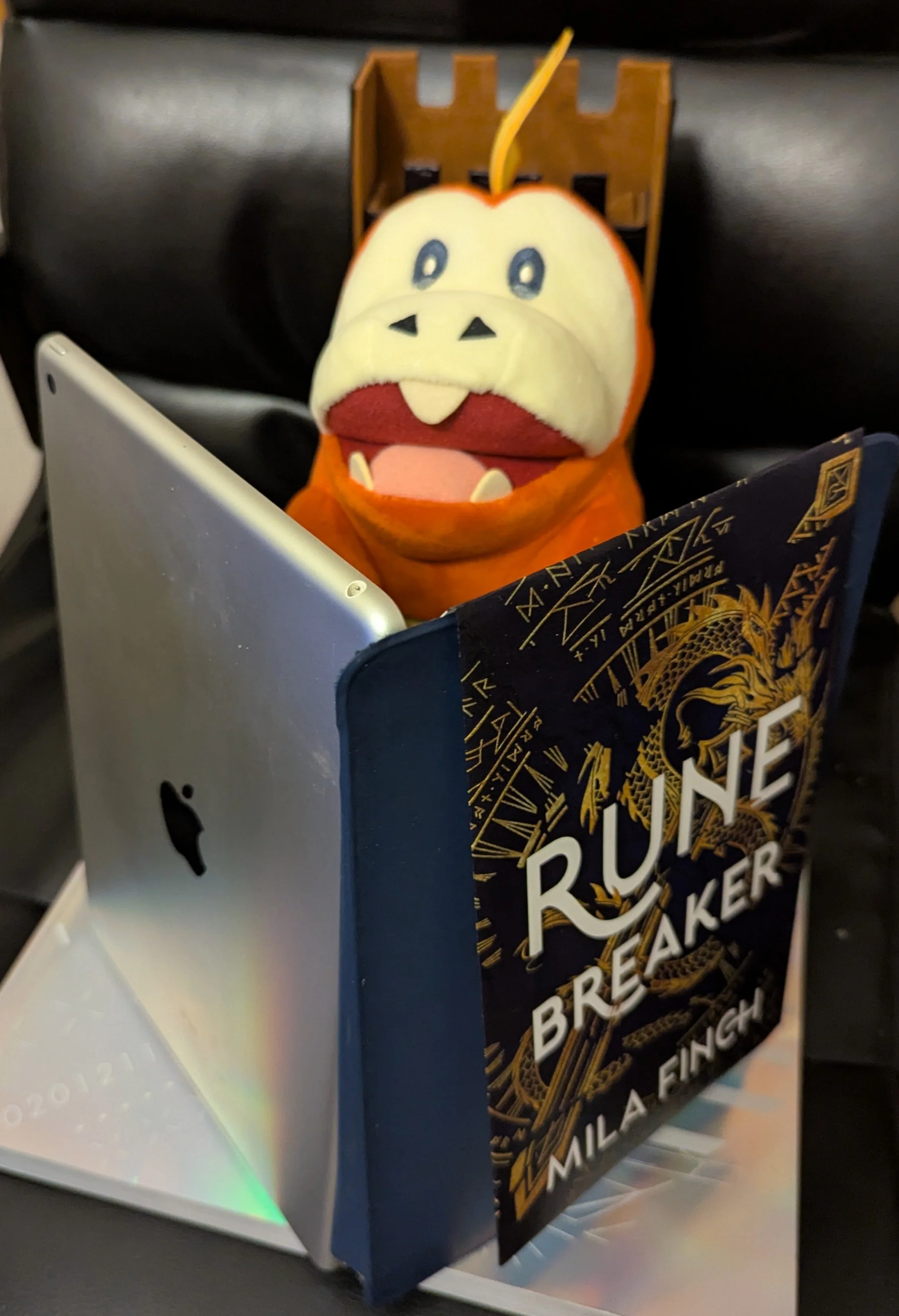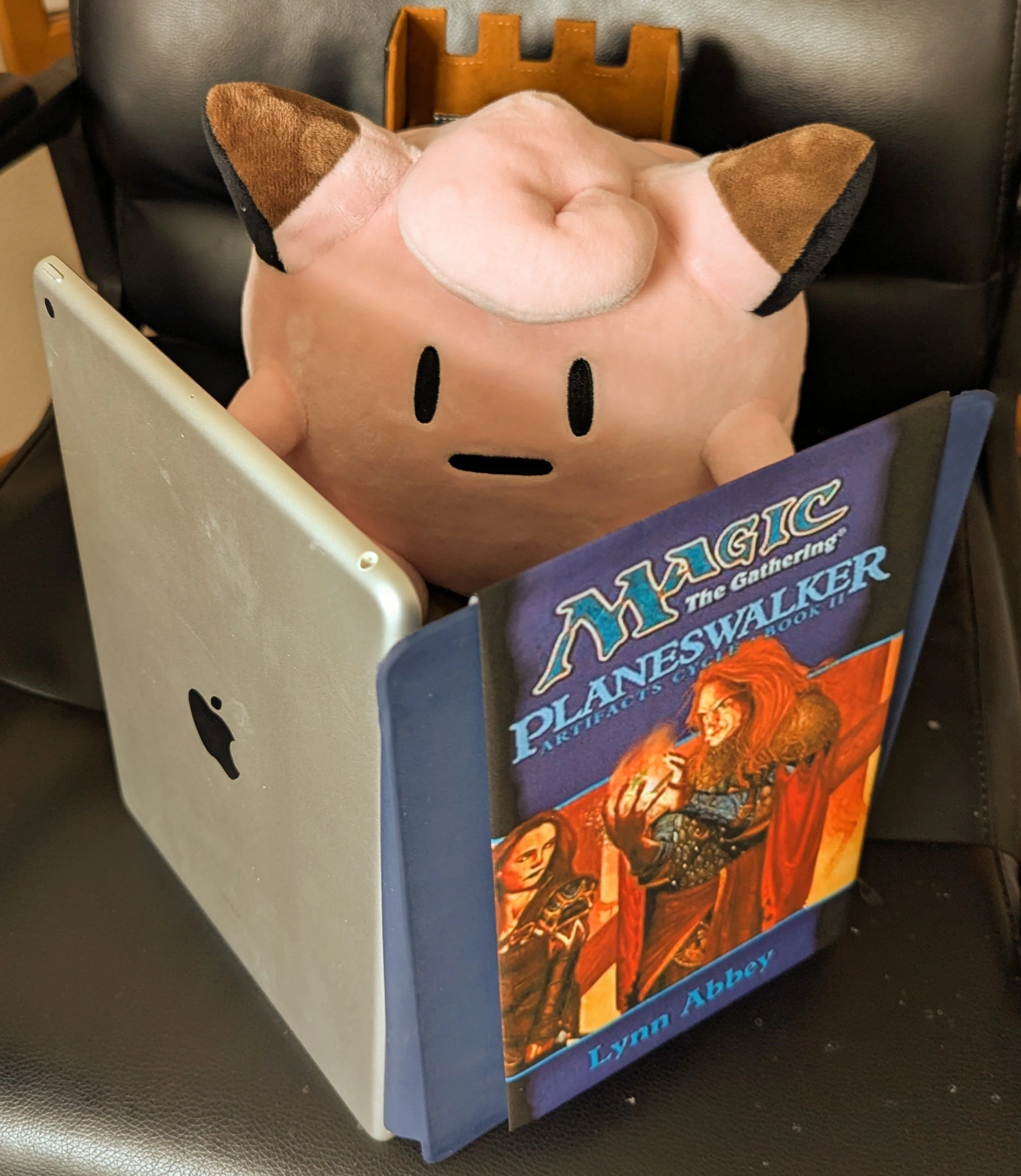
Planeswalker (The Artifacts Cycle, Book 2) (Part 2 - Plot, Character, Worldbuilding)
Welcome back, everyone. I hope you are enjoying your Sunday.
This is Part 2 of the analysis of the Magic: the Gathering (MTG) tie-in novel Planeswalker, Book 2 of the Artifacts Cycle. Please see Part 1 if you’d like to revisit the big-picture elements of the world. Today we’ll wrap up by dissecting the plot, characters, and worldbuilding.
Let’s take a ‘walk.
STATS
Title: Planeswalker
Series: The Artifacts Cycle (Book 2)
Author(s): Lynn Abbey
Genre: Epic Fantasy
First Printing: September 1998
Publisher: Wizards of the Coast LLC
Rating: 5/10
SPOILER WARNING
Mild, unmarked spoilers for Planeswalker will be provided throughout this review. Heavy spoilers will be confined to clearly labeled sections. I will keep the first paragraph of any given section spoiler-free.
Throughout this review, I will also be providing heavy spoilers for later events within MTG canon. While I will be steering clear of details that would spoil the progression of this book specifically, there is a strong chance that you will figure out certain spoilers if you pay attention to these bits of lore. I will confine the heavy spoilers to the Worldbuilding section.
Heavy, unmarked spoilers for The Brothers’ War will be provided throughout this review. I will also assume that you’ve already read my review of that book, though that isn’t essential to understand this one.
PLOT
We’ll need to break down the timelines individually.
Past
In theory, this should be the more interesting of the two timelines. It details epic adventures across three millennia, with clashes against the Phyrexians on multiple planes, including Urza’s ill-fated attempt to invade Phyrexia with a dragon engine and the return of the demon Gix.
The issue, as mentioned above, is the lack of stakes. We know from the start that Urza and Xantcha must survive the adventures. This would have been fine if this timeline were used to build character, with the evolution of Xantcha, Urza, and their dynamic being what’s at stake, but all three are static throughout.
Add to this the fact that the individual adventures aren’t all that engaging even outside of the stakes issue. Xantcha’s origin as a newt and the initial assault on Phyrexia are okay, but after that, the timeline just runs out of gas. Most of the action is summarized, and way too much time is spent on Serra’s Realm for no apparent (narrative) reason.
Present
This story is fairly interesting. I feel like this book would have been far better off if the past timeline were dropped and this one were fleshed out.
After returning to Dominaria, Xantcha has set herself the task of monitoring for Phyrexian agents on the plane, while Urza sinks into obsessing about the precise events that led to Mishra’s downfall. Xantcha concludes that the only way to jar him out of this obsession is to find someone to pose as Mishra and let Urza find catharsis by interacting with this substitute for his brother. To this end, she searches for a look-like, finding it in a man named Ratepe. Working with Ratepe, Xantcha is able to convince Urza of the threat of Phyrexians already on Dominaria. The three of them work together to scour the plane of these agents.
I didn’t find either Xantcha or Ratepe particularly engaging. Still, the concept was there. It was interesting to see other characters working things out and resolving threats without waiting for Urza to pull a Deus ex Machina. My main complaints about this timeline are that things don’t get enough development and far too much has to be crammed into the last 20% of the story, and those issues only really exist because so much of the book is taken up by a past timeline that really wasn’t needed.
Sequel
There are a few very minor contradictions between this book and The Brothers’ War, not to mention between this book and later books. The most glaring of which is the idea that Yawgmoth is a rival planeswalker and that he creating Phyrexia, when later books (In particular, The Thran) make it clear that he was very human and merely claimed control of a plane that an actual planeswalker had made. The latter errors are obviously not the fault of this book. As for the former, none of these errors cause meaningful damage. They’re clearly a result of all the books in this series being commissioned to different authors who are all working at the same time. The framing device for The Brothers’ War also left a lot of leeway for that book to be wrong about things and for later stories to give the “correct” version of the lore.
CHARACTER
Xantcha
I want to like Xantcha. She’s a very interesting character in concept. She’s a lone Phyrexian who found individuality thanks to the meddling of the demon Gix, seeking a means to destroy her creators. This leads her to an alliance with Urza, which evolves into the closest thing either one of these ageless beings has to friendship.
Where Xantcha falls short is … well, to put it bluntly, she’s the prototype for the modern Strong Female Protagonist. Not as insufferable or story-breaking, perhaps, but she’s as bland as Fatima in A Master of Djinn, defined less by her traits than the lack of traits. This does indeed make sense in light of her background, but that background doesn’t make her any easier to engage with.
Xantcha does become a little more interesting in the last 20% of the book, when the pace of the plot speeds up. It’s just too late by that point. Developments become so rushed that her struggles and decisions at the end don’t have any weight.
Urza
I didn’t compare Urza to Jake Skywalker as an offhand remark. That really is how he comes off in this book.
In fairness to Abbey, this isn’t necessarily a character assassination. Urza is pretty well-established as an unsociable character for whom the ends justify the means. He’s an anti-hero, rather than a hero. The issue is rather than Urza is an obstacle to the plot at every stage. During the past timeline, he starts as ready-to-murder Jake, so obsessed with destroying Phyrexia that he has no self-preservation instinct; in the present, he just wants to sit in his cabin and ignore the threat bearing down on everything he supposedly loves. Xantcha doesn’t so much play off him as try to work around him.
I wouldn’t mind this so much if Abbey had Shown his descent into this state, but she didn’t. Urza in Chapter 1 makes sense as a newly formed planeswalker who still holds many of his traits from The Brothers’ War, but by the time he meets Xantcha, he’s already become Jake, and he stays as Jake until almost the very end of the book. He just flips from murder-Jake to hermit-Jake between the timelines.
Now, Urza does undergo a change at the end of the book. It’s just that this is as unearned as Xantcha’s development. He’s suddenly a more heroic figure in line with what one might expect from later stories, and his explanation for how he got there really doesn’t line out with his behavior in the scenes before the change.
Ratepe
This character is both my favorite character and the most annoying one.
Much like Anden in Jade City, Ratepe is the closest thing we have to an Everyman in this story of immortals and interplanar travel. He’s initially in disbelief that Xantcha wants him to masquerade as a historical figure from millennia earlier in order to deceive another historical figure (imagine if someone asked you to masquerade as Leonidas to deceive Xerxes). Once he accepts the truth, he throws himself into the role, and finds himself struggling with his identity as Urza buys into the deception and begins treating him as the real Mishra.
At the same time, though, Ratepe is framed as an overly emotional and petulant character. If Xantcha is a prototype of the Strong Female Character, Ratepe is a prototype of the male character whose positive masculine traits have all been replaced by negative feminine traits, not unlike what we saw in The Stardust Thief. He does have a heroic drive to save his people specifically from the Phyrexians, but for most of the story, even this is framed purely as him not wanting a faction backed by the Phyrexians to win, almost as if he’d be content to let Dominaria fall if he could get revenger on the people he personally didn’t like. (Ironically enough, this does make him rather like the Urza we’ll see many books down the line in the Invasion Cycle.)
Also, there’s a very forced romance between Ratepe and Xantcha. We aren’t Shown this. We are Told that Ratepe got sexually frustrated and that Xantcha was willing to accommodate him, and then we are Told that they love each other. Nothing comes of it, either. Maybe if the present timeline were given more time to development, this could have been fleshed out enough to feeling meaningful. As it stands, it just comes across as a strange and unnecessary complication for the story.
WORLDBUILDING (Heavy Spoilers)
I don’t have a lot to say, either positively or negatively, about the worldbuilding of this book. It’s the lore MTG (as such lore stood at the time of publication) translated into the novel. That said, there is one issue that irked one, and one that feeds into my theory that Abbey’s hands were tied by the demands of Wizards of the Coast: memberberries. Two such major examples come to mind.
A detail about Xantcha that is given a lot of emphasis early in the book is her heartstone (referred to just as her “heart” in the novel), an object that functions similar to an Eldunarí from the Inheritance series. Breaking a Phyrexian’s heartstone causes instant death, while the holder of the stone can also use it to find the Phyrexian in question and detect any harm or distress. Xantcha steals this heartstone from a vault during Urza’s assault on Phyrexia, then entrusts the stone to him (in a moment that is meant to shown the strength of their friendship, though it doesn’t have any weight to it). The book then ends by emphasizing that Urza still has this heartstone and, thus, that he will never be alone.
There is also the matter of Serra’s Realm. This plane contributes nothing to Planeswalker. It is being introduced here because it will be important to the climax of Time Streams. The only relevance that the events of this book have on the events of that sequel is the simple fact that Urza visited Serra’s Realm, something that could have been handled in a single scene rather than multiple chapters of Xathancha being trapped there.
While I don’t know how much of the MTG story was planned out in advance, Urza’s Saga is part of the Weatherlight Saga, which ended in June 2001 with Apocalypse. In that book, it is revealed that both of these elements are indirectly part of the Legacy Weapon. Xantcha’s heartstone is used to create the silver golem Karn, and I distinctly recall (but haven’t yet reread Apocalypse to confirm) that Urza mentions the heartstone as part of the reason Karn is a contributor to the Legacy. Serra’s Realm, meanwhile, is going to be collapsed to serve as the power core for the Skyship Weatherlight, and the plane is released from the skyship’s core and able to be restored once the Legacy is detonated.
My theory is that Abbey had a mandate to incorporate both of these elements into the story. I don’t think this was necessarily an issue for the heartstone, as it falls into the category of undeveloped elements that needed more time. Serra’s Realm, however, wasted far too much time. The plot slowed to a crawl until Xantcha and Urza got off of that plane.
A MATTER OF TIME
Planeswalker is not a terrible book. It plays with interesting ideas. However, it also has many uninteresting ideas, and far too much time is wasted on those. While it was nice to reacquaint myself with a story I haven’t ready in twenty years, I remember now why I waited so long to read it again. It’s just wasn’t worth the time needed to read it.
Hopefully, the third book in the series, Time Streams, will be more engaging. We’ll be diving into that on May 22nd and May 29th for a 2-part review. I hope you’ll all join me for it.
Thank you all for stopping by. Please remember to share and subscribe if you enjoyed what you read here. Take care, everyone, and have a good weekend.
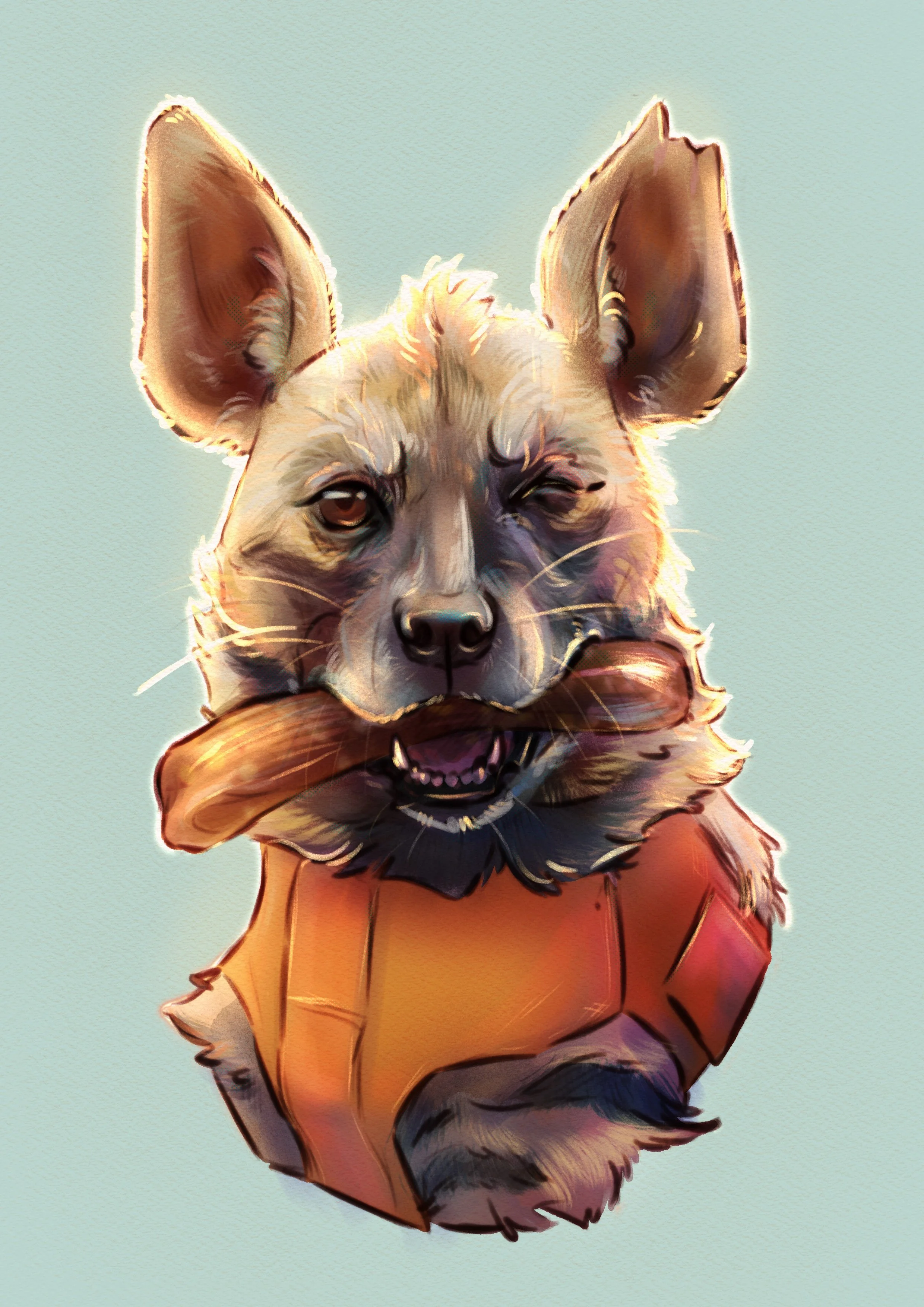
Looking for a story about the goodest of good boys? “Honor to the Good Boy”, a free short story inspired by Saint Guinefort’s legend, is now available!
Mehdi likes scavenging with a human pack, even if they have poor noses and aren’t very bright. What more could a hyena want, when he earns sausages every time he finds funny herbs and powders? But when Mehdi catches the scent of a god of chaos, he has to make a hard choice to save his humans.
I hope you’ll join me as we follow this hero as he does his duty for his friends and his goddess - and, of course, all the sausages he could ever hope for.