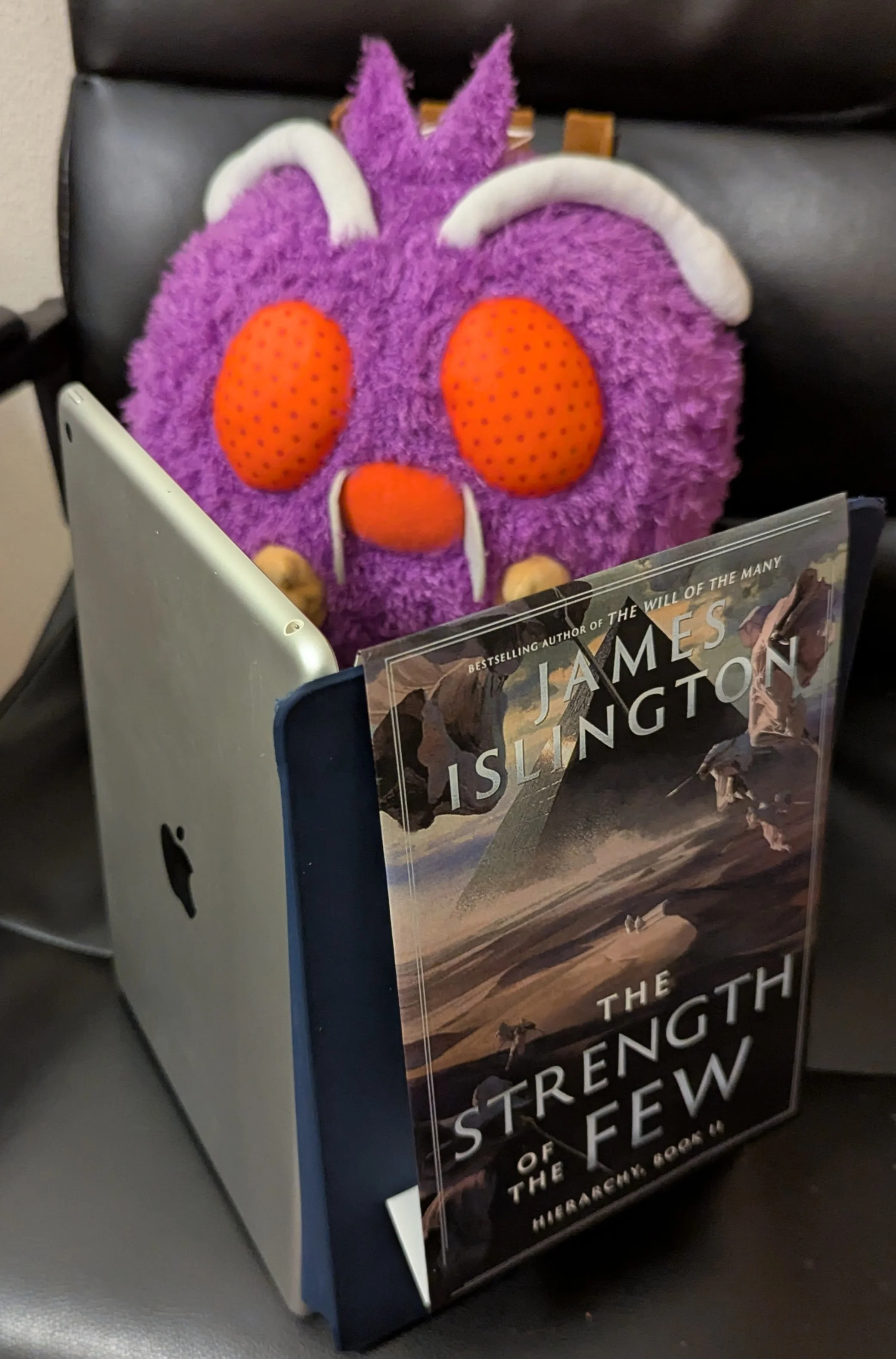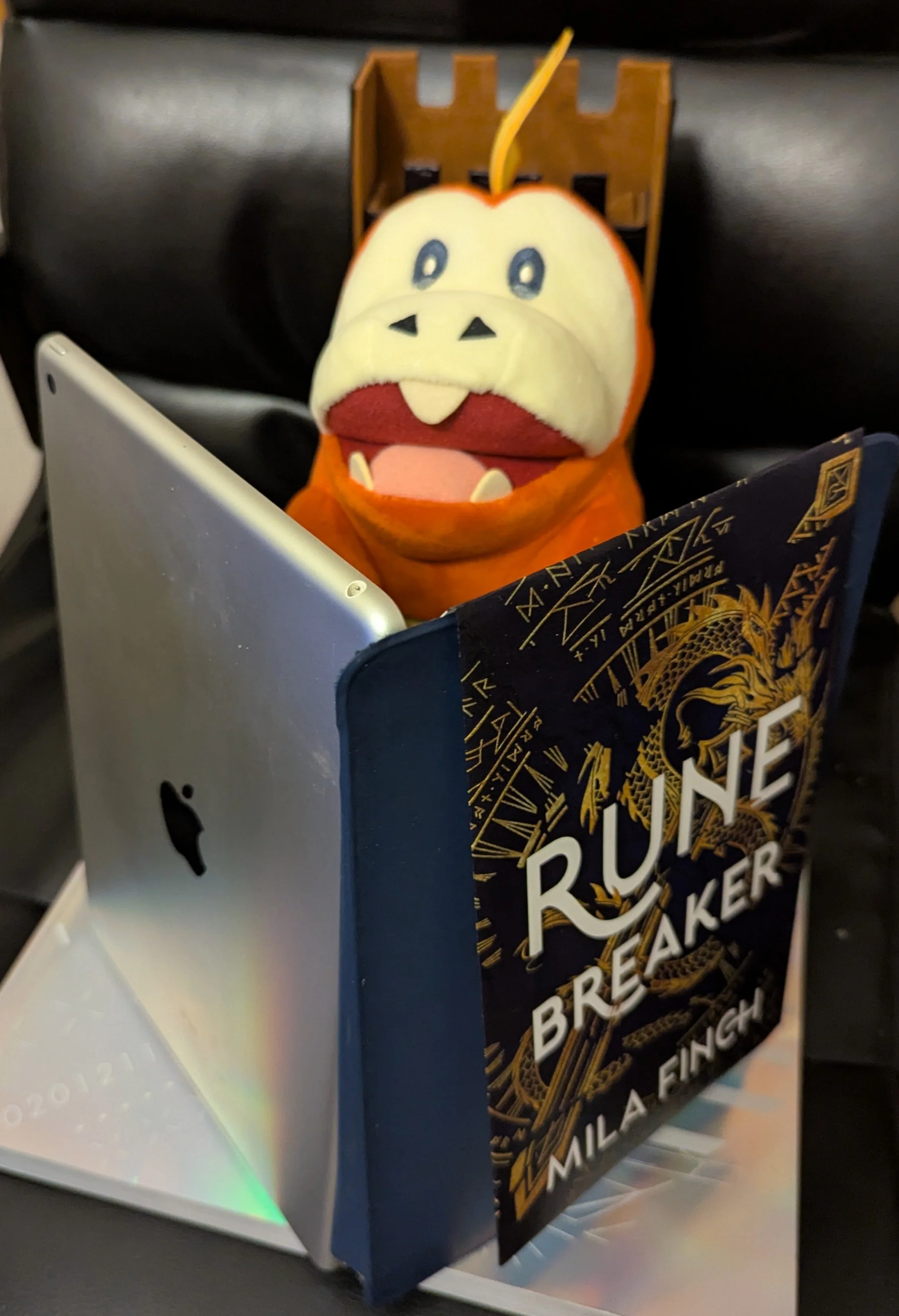
Runebreaker (Spotlight on Dam Breach Analysis) (Part 1)
Hello, all. I hope you’re all having a good weekend.
In January, I was looking to read Romantasy a little more widely, with the intent of finding something in the genre that would be better than The Empyrean. Not seeing anything desirable within the other popular titles, I went with an indie book that the Kindle store recommended to me - that being Runebreaker, by Mila Finch.
This book was terrible. Even setting aside the bland power fantasy, even ignoring the pornographic sludge that passes for its Romance elements, it is full of logical holes and blatant contradictions. This really is a shame, because at a conceptual level, this is a story that could have worked really well. The worldbuilding contained some genuinely interesting ideas, and the plot spun out of those ideas.
The proper review for Runebreaker will be a multi-part series that runs on Sundays, beginning next weekend (March 22nd). Today, we’re going to talk about something more lighthearted: a worldbuilding nitpick.
See, in Chapter 6 of Runebreaker, Finch contrives a certain scenario to resolve an action scene. The fallout of this scenario doesn’t break the story in any way. However, it does show that Finch either doesn’t understand or simply didn’t think through the elements involved in the contrivance. It’s the sort of mistake that most audience members won’t notice … but those of us who are subject matter experts in this one specific thing would.
So, while I’m going to go down a rabbit hole with this one, please understand that this particular post isn’t intended as a criticism of the book in and of itself. This is the sort of mistake that anyone can make while worldbuilding. Authors should try to do enough research for their stories to make sense, but a small slip here and that is forgivable.
All right. With all that set up, who’s ready for an introduction to dam breach analyses?
SPOILERS
This post will provide heavy spoilers for events up through the end of Chapter 6 of Runebreaker, as well as minor spoilers for details later in the book. None of these spoilers will be marked.
STORY
In Chapter 6 of Runebreaker, the Main Character (Aelie) and her sister (Rheya) are trying to escape some guards. Their plan is to jump from the rooftops into a “canal” and move along “the service ledge” (which is apparently “too tight for guards”). Aelie then plans to open “the storm gate” that “holding the reservoir”, thereby washing away any guards that try to follow them anyway.
Earlier, it was established that Aelie has the power to break the magical runes that power so much of the infrastructure within the fae city where she and her sister live. She opens the storm gate by breaking one of these runes. The magical backlash of her doing this, though, damages the reservoir embankment. This triggers a flood that overflows the canal, leading to the following consequences:
Aelie nearly gets swept down the canal, but is rescued and imprisoned.
Rheya is swept down the canal, and Aelie loses tarck of her.
“Three dead. Brushed when the embankment gave way.” Since Aelie doesn’t reflect on those deaths outside of the possibility of Rheya being ones of them, and the narrative clearly wants to gloss over the destruction and death, I think we can assume that all three were guards who tried to pursue Aelie and Rheya onto the service ledge.
“Half the quarter is underwater. Shops, homes - ruined. Famalies wading through filth, goods floating down the canals.” This is from canal overflowing.
AN ENGINEERING PERSPECTIVE
My Background
I have nearly a decade of experience in Civil Engineering. Most of this has been in the design and review of structures to deal with stormwater, including ponds designed to retain large amounts of water and the embankments, dams, and discharge structures to support those ponds.
When Finch made this sort of infrastructure relevant to her narrative, she had my full attention. I had questions. Some of these issues made sense in hindsight, but even handwaving everything else, there was a contrivance that I simply couldn’t ignore.
My commentary here should not be construed as official engineering advice or recommendations. If you are dealing with an engineering problem that is in any way related to what we discuss here today, please consult with licensed professionals within your respective jurisdiction. This commentary should be considered as nothing more than a lighthearted nitpick, asking questions that the beta readers probably should have asked if they had any experience in this particular field.
What We’re Looking At
What Finch described here is a dam breach.
The term “dam” has a much broader application within civil engineering than it does in the common usage. Any time that you have a surface water impoundment (like a pond or reservoir) with a point of discharge (like an outlet pipe, and overflow weir, etc.), the embankment where the point of discharge is located is considered a dam. This may seem like common sense. After all, a lot of impoundments are built by raising an embankment across a natural flow path (such as by damming a stream or ephemeral channel). However, there are cases where a natural impoundment gets built up and the point of discharge gets rerouted from the natural flow path, in which case the “dam” ends up being what we’d previously have though of as the side of the impoundment.
Why is this the case? Well, it’s because this is the most likely failure point on the structure. An outlet pipe can leak, undermining the embankment. Water overtopping a weir can erode the embankment’s top and exterior face. Erosion downstream from the point of discharge can work its water upstream and chew on the toe of the dam. All these factors can conspire together until something gives way. The hydrostatic and hydrodynamic pressure of water overwhelms the inertia that holds a portion of the dam in place, and a breach opens, dumping water that would otherwise be safely retained behind the dam.
It probably won’t surprise you when I say that this can be pretty devastating. However, not every dam breach unleashes an apocalyptic wall of water that annihilates everything downstream. Even a breach of a dam that’s only holding back a few feet of water can do a lot of damage. Water is heavy. A flood that is just a foot deep can be dangerous to people or damage homes, especially if it flows at a high velocity. Breaches are therefore taken extremely seriously. In some parts of the United States, a dam breach analysis needs to be run any time that a new dam is built or an existing one is modified. This analysis includes examining the channel for miles downstream to ensure that, even if the dam does breach, the flooding of properties adjacent to the channel will be minimal.
WHAT FINCH GOT RIGHT
The breach itself, as well as the fallout from it, is quite realistic.
The destruction unleashed by Aelie breaking the rune propagates outward from the storm gate. The embankment around the gate fails, and water rushes through the breach. This is effectively the same as an outfall pipe rupturing during a storm event and collapsing the embankment around it. The breach will expand until it reaches a stable configuration.
Likewise, with how it is described, the amount of destruction makes sense. We are explicitly told that the breach discharged into the canal, not directly into the (comically close) urban area. The canal did exactly what such a canal is meant to do, providing a stable conveyance for high-velocity flows. The flooding is due to overflow. While that overflow will certainly do damage and will be dangerous to anyone unfortunate enough to be standing in the street as it rushes by, it’s entirely plausible that it will primarily spread around filth and cause water damage, rather than knocking buildings off their foundations.
The low death toll is a slightly harder sell, but I choose to see it as confirmation that most of the flow from the breach was contained to the canal.
Three dead, explicitly from the embankment failing? Obviously, those closest to the breach would be most at risk, and we know guards followed Aelie and Rheya into the canal.
Aelie and Rheya were also swept down the canal, with Aelie receiving timely rescue, so clearly, the conditions in the canal were dire. Also, when Aelie is pulled out, it’s by someone right on the side of the canal, so it seems the overflow wasn’t too deep and/or wasn’t flowing fast enough to be dangerous for an adult man.
Just because no one else died, that doesn’t mean people weren’t knocked down, swept along the streets, hit by moving debris, or otherwise injured by the overflow that flooded the streets.
All this is to say that I mostly find this breach to be believable. It is incredibly lucky that more people didn’t die, given that - and I cannot stress this part enough - the area next to the canal was a busy urban area. Still, this is still perfectly within the realms of possibility, especially if the the breach is relatively small and the capacity of the canal is high.
WHAT FINCH GOT WRONG
Okay, so if I think the breach itself holds up, what is my problem? Why do I think this scene is contrived?
The reservoir, and more specifically, the storm gate that was the origin point of the breach. Their existence does not make sense. Since this scene is only possible because of the reservoir and the gate, the scene, however realistically it is executed, still ends up being contrived nonsense.
And that’s what we’ll get into this Wednesday, March 18th, as we wrap up this analysis. It’s more of a rabbit hole than actual literary criticism, but sometimes, the rabbit holes are as entertaining to explore in their own right.
Thank you all for stopping by. Please remember to subscribe and share if you enjoyed what you read here. Take care, everyone, and have a good week.

Volume I of my first serialized Romantasy novel, A Chime for These Hallowed Bones, is now available!
Kabarāhira is a city of necromancers, and among these necromancers, none are more honorable or respected than Master Japjot Baig. Yadleen has worked under him since she was a girl, learning how commune with bhūtas and how to bind these ancient spirits into wights. Her orderly world is disrupted, however, when a stranger appears with the skeleton of a dishonored woman, demanding that her master fabricate a wight for him.
To protect her master from scandal, Yadleen must take it upon herself to meet this stranger’s demands. Manipulating the dead is within her power, but can honor survive in the face of a man who has none?
Come for slow-burn tension, and Enemies-to-Lovers dynamic, and bone-based engineering! I hope to see you there. Volume II is in development!