The Edgelord Opening of Isako (Part 2 - Cringe & Comparison)
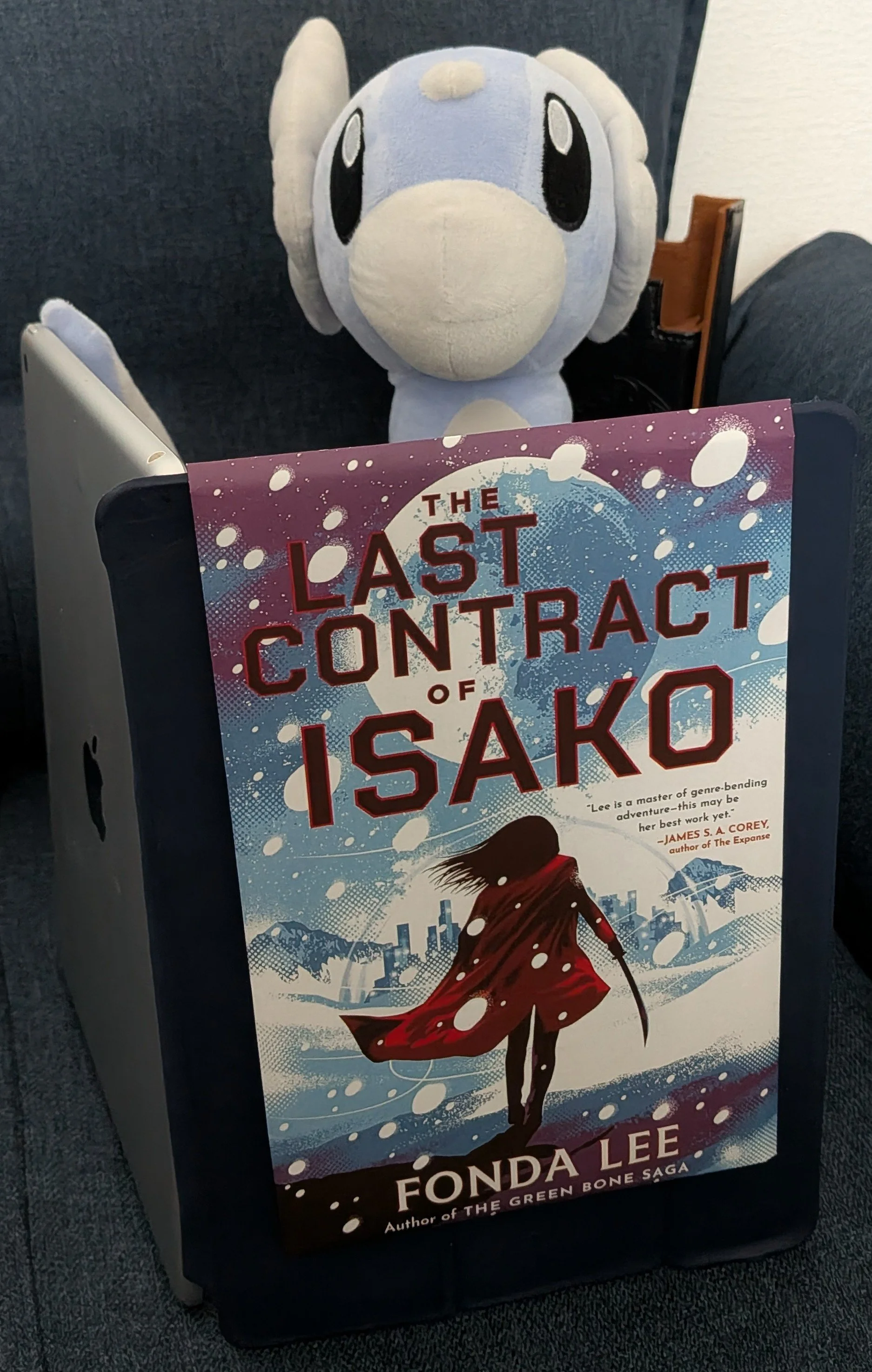
Welcome back, everyone, to the discussion of the opening to The Last Contract of Isako.
This is Part 2 of the series. In Part 1, I summarized the first three chapters of the book and highlighted the strengths of this opening. Today, we’ll wade into the weeds and discuss how Lee’s efforts to make the story feel dark and mature backfired, before discussing the chapter from Dan Abnett’s Hive that serves as a far more effective version of this book’s third chapter.
As a reminder, heavy spoilers from the first three chapters of The Last Contract of Isako (and only the first three chapters) will be provided throughout this post. This will only take us up through the inciting incident of the book, so the majority of the book will remain unspoiled.
Let’s get to it.
SHE IS THE EDGELORD
Stumbling At the Starting Gate, Dropping the Baton
Chapter 1 opens with the following epigraph.
Fuck Earth.
- the last words of Captain Janus Brady, 44 AF
Right off the bat, we have unnecessary swearing that seems to be rammed in just to be edgy. There’s no other narrative purpose to it. Hypothetically, one could write a story where this serves as a mystery (i.e. “Why does the author want us to know that this historic character has such antagonism towards Earth? What is the source of this antagonism?”), but the idea isn’t engaged with until Chapter 3, and it’s revealed to be a political slogan so low-brow that it makes Duck Frump seem like polished intellectual commentary.
To make matters worse, Lee does not use epigraphs consistently. There’s no epigraph to Chapter 2. A quick skim through the book reveals that maybe half of the chapters have epigraphs. There doesn’t even seem to be a consistent pattern to it. This means that, the second we get to Chapter 2 and don’t get an epigraph, opening the book on a slur feels even more tacked-on to force a vibe.
This bit of awkward, immature edginess should have been a blip. It should have just been a miscalculation at the start of the story that could easily be laughed off and forgotten. Sadly, Lee doubles down on it in Chapter 3. In doing so, she destroys the tone of the inciting incident.
In the middle of the ritual suicide, amidst the pathos and sorrow of colonists marking out into an inhospitable waste and collapsing before their loved ones’ eyes, we get this absolute gem that transforms the entire inciting incident into parody.
The figures who’re still moving are difficult to see now, but Isako’s distance vision is still sharp. Dew Loren’s outlasted just about all the younger wagefolk, tough old coot that he is. Atheletic genes or strong lungs maybe, or just an iron will. When he finally sits down, exhausted, he stretches out his legs, lies back, and looks up at the sky like he’s reclining across a picnic blanket on a sunny day.
“Fuck Earth,” [Loren’s pregnant daughter] cries out.
“Fuck Earth,” others shout in support.
Up until this point, “Fuck Earth,” has gotten no explanation as a slogan. If anything, because Loren worked for Isako’s boss, he was part of the “Earth” faction. This means that, at best, this scene of profound sorrow and grim sacrifice has slammed headlong into the bathos of gutter-tier swearing being presented as a rallying cry of a political movement. At worst, Loren’s resignation, previously framed as an honorable sacrifice, is being spat upon by the daughter for whom he is making that sacrifice, all because she hates the cause that he supported and led to this situation.
** Slow clap ** Well done, Ms. Lee. Maybe next time, you can have someone let rip a loud, wet fart. That will really sell us on this being an edgy story that we should take seriously.
Saying, “God is Dead,” is Not Edgy Anymore
Oh, but we are not done with the first page of this book.
After the epigraph and a small label to identify the date for the reader, these are the first two sentences of the actual story.
Two names remain on Isthmus Iskao’s list of wagemen to dismiss from the Company.
Only two, thank all the gods of old Earth that Isako doesn’t believe in.
Why are we being told that Isako doesn’t believe in any gods at this specific point in the story?
Nothing in Chapter 1 is relevant to religious beliefs, so there is no trigger. It also doesn’t make sense as something to naturally flow from Isako’s stream of consciousness. I’ve seen Youtubers who will say things like, “Thank the God I don’t believe in,” but that is because they are trying to use familiar language while asserting their own identities. Thinking is a completely different ball game. Why would Isako even think, “Thank all the gods of old Earth,” in the first place if she doesn’t believe in them? And it’s not like the narrative text is filled with unprompted lines like this, so it doesn’t even work as setup for Isako processing information in a specific way.
Most irritating of all is that Chapter 3 conveys the exact same character information about Isako, but in a manner that feels diegetic, both in terms of being prompted and in terms of being something someone would actually think.
But Easthatch is serene. A circular public park leads to a simple wide stone boulevard lined with precious silver birch trees just starting to bud pale leaves. Quiet pilgrims sweep every inch of the path, and at the end of the walk, a marble statue of the Mother in Chains smiles down beatifically from atop a pedestal, blessing those passing and welcoming them into the Waiting. Isako isn’t a Sefan adherent, but she appreciates the gentle ambiance. When it’s her time to resign, she would want to come here.
We can assume Isako isn’t literally thinking to herself, “I’m not a Sefan adherent,” in this moment, but the rest does feel like something she might be reflecting upon, so providing some clarification via Telling still feels natural.
The diegetic moment makes the original mention feel redundant. The original is left with no other function except to ape anti-heroes from decades ago, before disavowing God became something mainstream. Add to that the fact that this is Science Fiction, a genre where disavowing or rationalizing the divine is already commonplace. As a result, making Isako’s atheism the first thing we learn about her doesn’t inform us about her character. It informs us of the author’s desperation to make her seem rebellious.
Telegraphing the Ending, Still Lets Us Down
I’m going to be honest, with how the scene in Chapter 1 is staged, it makes it seem like Isako is coming to murder these two wagefolk.
She tracks the pair down to a bar. There’s a whole lot of buildup about how everyone hates and fears her. The one man tries to kill her. She asks Loren if he wants to do things privately, and he fatalistically shrugs off her offer.
All the setup seemed to indicate that “termination” in this world is very literal. Maybe their contracts mandate that they be executed after the work is done, or maybe they simply need to be silenced to avoid sharing secrets. The fact she had to track the pair down to a bar, rather than them being fired in some professional setting, further implied that her task was a dirty one that couldn’t be formally connected to the company.
Except … no. She only shanks the one guy in self-defense.
Well, maybe Loren is going to be executed by the company later? He sure is acting like he is doomed to die soon.
No … he resigns. Voluntarily. Isako suggests he could find another job, and he not only rejects this but also refuses to be a burden to his family. This left things very muddled. The existence of alternatives means that this is not a grim, inescapable fate. This man is going to do something mysterious but obviously fatal because of his pride.
What this means is that, by the time we get to the ritual suicide of resignation, a lot of its impact is lost. Sure, Greves is dying to make a statement and bring about change. His death works fine. For everyone else, no one’s pushing them out the airlock at gunpoint. They are choosing to kill themselves for pride and … let’s see what Isako offered Loren … “three years worth of wages, along with additional bonuses based on seniority and division performance.” This isn’t grimdark or even edgy. It just makes the people of this setting seem like a very stupid cult.
Lee is treating death as glitter, and the effect is amateurish.
THE DARK AND THE LIGHT OF THE HIVE
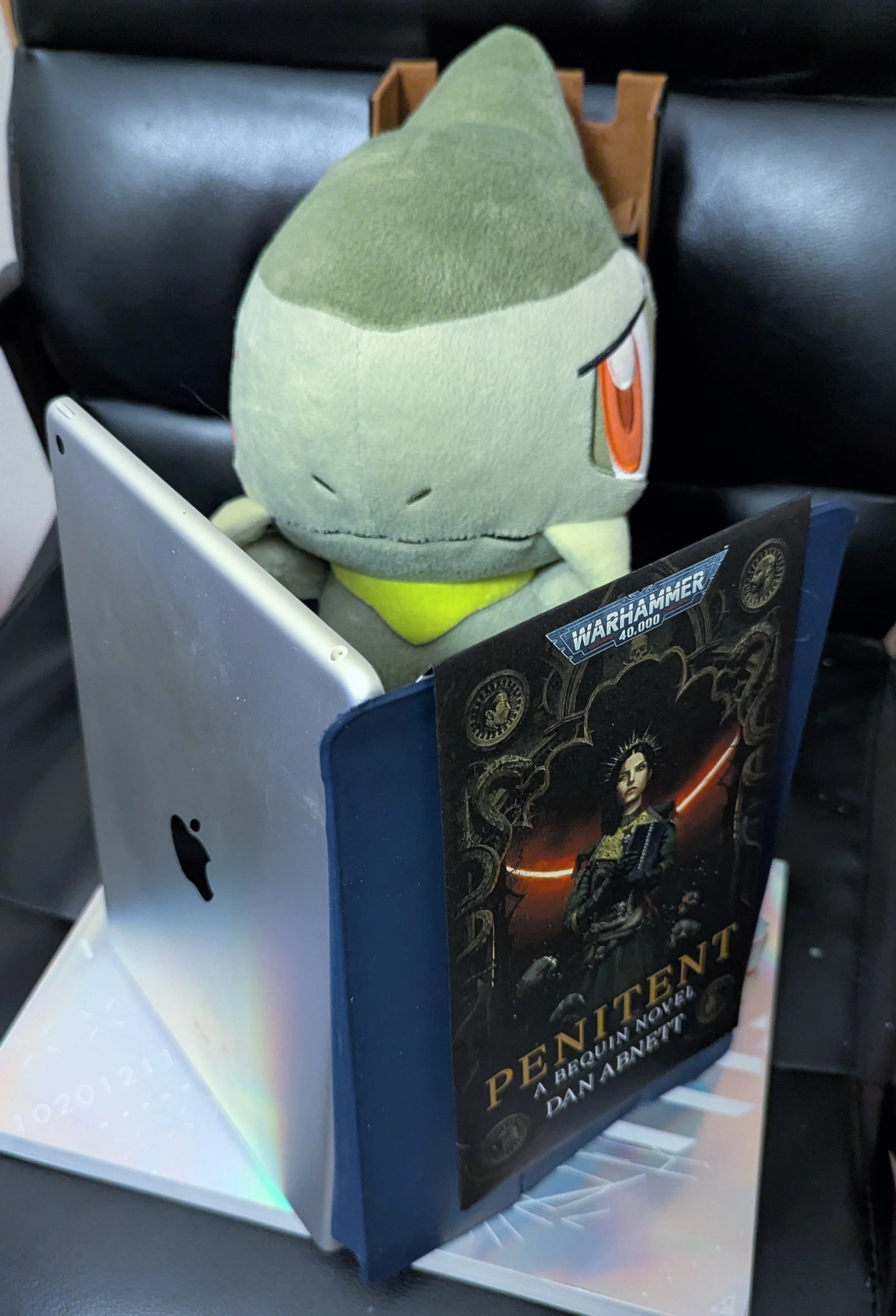
“The Hive Opens” is a perfect example of how Warhammer 40K novels, despite being tie-in fiction for a franchise stigmatized for its association with neckbeards and edgelords, have a far better grasp in telling stories with dark or mature elements than many works of original fiction.
Story
This short chapter (just 4 pages) details the death of Galter Stike, a crime lord living in the primary hive city of the planet of Sacramentus (to the point that the residents refer to both their city and the world as simply “the Hive”) . As punishment for his crimes, Strike is sentenced to exile Without - forced to walk into the wastelands behind the Hive’s protective shell, guaranteed to die within hours. This execution (in fact, if not one in name) is observed by hive denizens from multiple economic classes and is carried out with great ceremony. Throughout it all, the narrative text shows Strike inwardly cursing the unknown actors who betrayed him to the authorities, while his dialogue shows him begging for mercy. The chapter ends with Strike marching out into the wastelands, reflecting how he was leaving behind the entire known world to go to his death.
Worldbuilding
Throughout the scene, two pivotal ideas about this setting are cemented into the reader’s consciousness.
First, there is the contrast of the darkness inside the Hive to the light outside, and how this has granted light a spiritual aspect in the consciousness of the Hive. This is encapsulated in a single exchange immediately before the death sentence is issued.
The head reeve nodded back. There was almost pity in his eyes. He said, perhaps feeling that something ought to be said, ‘Plenty be your light.’
‘Plenty be yours,’ Stike replied, automatically, like an ecja fool, because that’s what you said when somebody wished good light upon you. Hearing this, the watching crowd echoed it too. ‘Plenty be your light,’ all of them, a mumble, a murmur behind their hoods and masks, like idiots. This was no place for such courtesies. Stike was about to have more light than any of them could ever desire. But they said it anyway, for want of anything better. They said it to fortify themselves.
“Plenty be your light” is a phrase that gets a lot of use throughout this book. It is a standard blessing within the hive, one that citizens at all levels know. The availability of light is also something that characterizes the different levels of the Hive. This bit of ritual isn’t just fluff for a vibe. It introduces something fundamental to the setting.
The second aspect is the concept of the Hive being the totality of its denizens’ concept of reality. This is stated very bluntly at the end of the chapter:
He was sixty-eight years old. He had never stepped outside the Hive, not once. He had never even seen outside. Without, he had been taught, there was nothing but the endless barrens of the spoiled land and ore fields. A might might not live more than a few hours of time, perhaps not even an hour, lacking clean water, food, a hood, heat, or shelter. There was nowhere to go. There was no other place. The Hive was the whole of the world.
More importantly, it is established well before this point, when Stike is panicking prior to being cast out.
‘Anything!’ Stike yelled. ‘Anything else!’ He would accept that. Life in a cell, in a Neg toilgang, in a Cauldron chem-pond. Even execution, which is honestly what he had been expecting.
This opening asserts how the Hive is an entire world onto itself, and its denizens can’t truly conceive anything beyond it. Again, it’s an idea that carries through the book. The few characters who either come from or were sent out beyond the Hive are defined by that experience.
Plot
This scene, much like Chapter 3 of The Last Contract of Isako, is an inciting incident, albeit just for just one of many POVs. Stike’s exile leaves a power vacuum in the criminal underworld of the Hive. Szen Kaidemueller, a criminal returning to the Hive after serving with the Hive’s defense forces, sees this vacuum as an opportunity to turn himself into a kingpin. This inciting incident doesn’t define the overall narrative to the same degree that Greves’s death does. Still, I think it’s good that Abnett took a scene that could otherwise exist in isolation as a setting-building prologue and made it plot relelvant.
Tone
All right. Time to get to the element that makes the opening of Hive a success while the opening of The Last Contract of Isako fell flat.
It would be easy to write Hive’s success implementation of a dark tone off as a benefit of being a tie-in. After all, anything associated with Warhammer 40K can be assumed to have that vibe, and Abnett could reasonably assume that anyone picking up this book would be coming in with those preconceptions. He could just let the audience to the work for him.
However … that’s really not fair to Abnett. After all, Lee had two chapters to lay a strong foundation for her inciting incident, only to undermine it by telegraphing and tacked-on additions. Besides, Abnett did the work to earn the dark tone of his book without relying on the wider Warhammer 40K mythos. There’s palpable anxiety in the buildup to Stike’s exile. We know he’s going to a horrible fate, we feel his panic, and then when the moment comes, the finality feels like a payoff. There’s no random swearing that presents itself as something more profound, and Stike’s rejection of the religious beliefs of his fellow citizens comes across as a diegetic rejection of the system sending him to his death.
Lessons Learned
I think that, with a few tweaks, Lee could have delivered an inciting incident with the same punch as “The Hive Opens”. I think she just needed to dial back to tension in and sense of finality in Chapter 1 and instead build up a sense of dread in Chapter 3, while removing the tacked-on swearing and the redundant mention of Isako’s lack of belief. This would have delivered the same darker tone in a manner that feels left forced. Even if Lee was not trying to be edgy, making these adjustments would at least deliver a more tonally consistent narrative.
A CRACK IN THE DARKNESS
The worldbuilding presented in the opening chapters of The Last Chapter of Isako is decent. Its flaws should be nitpicks. Unfortunately, because the worldbuilding provides essential context to the inciting incident, the tonal issues widen the cracks. The result is a world that feels like it is warped around the tone, rather than a tone that springs naturally from the world.
We’ll get into that next Sunday. Until then, thanks for stopping by. Please remember to subscribe and share if you enjoyed what you read here. Take care, everyone, and have a good week.