Madness in Wonderland (ARC Copy Review) (Part 2 - Characters & Worldbuilding)
Hello, all. Welcome to the ARC copy review of Madness in Wonderland.
Last week, we did the overview of the book. This week, we’re going to roll up our sleeves and look at the characters, plot, worldbuilding, and theme.
As stated last week, I was provided a free, digital copy of this book by Ms. LeMieux for the purposes of this review.
All right. With all that established, let’s go down the rabbit hole.
STATS
Title: Madness in Wonderland
Series: N/A
Author(s): Mindy LeMieux
Genre: Romantasy
First Printing: September 4th, 2026
Publisher: Self-published
Rating: 8/10
SPOILER WARNING
Mild, unmarked spoilers for Madness in Wonderland will be provided throughout this review. Heavy spoilers will be confined to clearly labeled sections. I will keep the first paragraph of any given section spoiler-free.
CHARACTER
This is definitely one of those stories where the leads are the only two worth really getting into. There certainly is a secondary cast, and they are functional within their narrative roles. It’s just that the story doesn’t focus on them enough to be worth commenting upon.
Maddie
Blank Slate
Our Female Lead is a pretty standard blank slate protagonist in her 20s. She works out and drinks health drinks, is down on her luck, thinks she's less pretty than the reactions of other characters would suggest, and like popular music (in this case, Owl City). She is opinionated and passionate. Fashion is something she pays attention to.
I realize this may sound like quite a lot of character, but these are all aspects of What she is (that is to say, an American woman of our modern era) rather than anything that truly defines her as a unique individual. They make her relatable to the target audience, but not in the sense of being a distinct individual who's similar to them. These things make the reader think, "Hey! She's just like me!" without alienating people who don't tick all the boxes. Most of these aspects of Maddie don't even apply to me, but those differences never alienated me. Even I could slip right into her headspace.
The closest thing Maddie has to identifiable character traits, outside of what's relevant to the theme, is her desire to be organized and tidy. Even this only seems to exist to facilitate one argument with Simon.
All of this may sound like a criticism, but it's quite the opposite. This is a case where a blank slate Female Lead makes sense and works well. Her modern mindset doesn't clash with her environment when she is literally from our modern world. This caters to the experience of the Romance novel without undermining the rest of the story.
Character Arc (Heavy Spoilers)
Maddie's core character trait is her hatred of losing. This manifests in a small way in her competitiveness and in a larger way with her fixation on revenge. Her backstory is that she was a personal trainer who got sexually harassed and then fired when her harasser conspired with her boss to destroy her career. At the start of the story, she is preparing for legal proceedings to sue the ones who harmed her and get her life back.
Throughout the book, Maddie constantly dwells on how she needs to get back to Oregon to complete her revenge. (This is a case where ad nauseum repetition of information ends up being effective, as it really hammers how just how obsessed Maddie is.) As she sees how resentment and revenge harm others, though, she begins to realize that this obsession isn't healthy. This leads to her pivotal choice at the end of the book. The revelation is a tad rushed, so it doesn't have a lot of punch, yet it does a test make logical sense.
Rather importantly: Maddie herself admits her obsession is wrong. The story doesn't coddle her, project onto others, or move goalposts to fake development without ever putting her at fault. She accepts that she herself needs to change. This makes her a lot more likeable and makes her Happily Ever After feel more earned.
Simon
The Male Love Interest is a mechanic and inventor who loves his sister, is sexually attractive, and has a good sense of humor. He is instantly attracted to Maddie for both her personality and her physique. His only other defining trait is that he is still grieving after the disappearance of his parents six months earlier, which makes him overprotective of his sister and hypersensitive to the possibility of Maddie leaving him.
Again, not a criticism. This is a character who's easy to like, and this makes it easy for us to root for Maddie when she's attracted to him. The flaws that spin out from his grief are something for Maddie to help him overcome and for him to be driven by to help her.
Romance
What Else Is There?
The relationship of Maddie and Simon is built upon the fact each things the other is sexy ... and really not much else.
Don't get me wrong, LeMieux does give other reasons rooted in their individual characterizations. Maddie appreciates Simon for helping her, and Simon is draw to Maddie's passion. It's just that she doesn't given them much time to grow into these feelings. The entire story takes only a few days. This means that the other reasons, while they may be true, feel secondary to them being attracted to each other.
I don't like this ... but I also don't consider it to be a flaw in this case. The story is structured to account for it. The question is never whether Maddie and Simon will fall in love; it's what they will do when Maddie is finally able to go home. This means that the story had the vibe of a summer fling, rather than a toxic relationship propped up by sex and obsession. Again, it feels like a feature of the story LeMieux promised us, not a byproduct.
Trust
Very briefly at the start of their relationship, Maddie wonders if she can trust Simon, give how the last man who showed interest in her sexually harassed her and then destroyed her career.
This isn't even a conflict. Maddie worries about it for a single scene, gets over it without any meaningful conflict, and moved forward with her relationship with Simon. It's a tad underwhelming. I wonder if LeMieux only brought it in this way because she felt obligated to acknowledge the impact of sexual harassment but didn't want to actually explore the matter (which, fair enough, yet it seems like not acknowledging it would have been the cleaner option).
And yet ... once again ... this works fine. It makes sense for Maddie to hesitate for a moment, decide her attraction to Simon overrides her reservations, and move on. LeMieux doesn't abuse this to pump the narrative full of filler drama. Plus, as a bonus, we actually get Shown some of the harassment. It makes the hesitation far more credible than if Maddie just kept insisting the last man was bad without providing any specifics.
Double Standard(?)
This is a question that could really be asked at any point in this analysis, yet this seems like the place where it's most relevant. Why am I cutting LeMieux so much slack for writing her romance and characters this way when I gave Yarros, Evans, and Finch (among others) so much flack?
It goes back to the matter of how LeMieux presents this story. Put it this way: do you like blueberries?
I don’t have strong feelings about them. What I do have strong feelings about are baked goods with blueberries in them. I find them almost universally vile. Pancakes, breads, or muffins of irregular quality, sometimes burned or undercooked or with lumps of improperly mixed ingredients, filled with gelatinous blobs or concentrate-stained regions that taste like distilled blueberry flavoring … nasty stuff. I could stomach it with Nutrigrain bars because, at least there, the filling was of a regular consistency. It wasn’t until my fiancé asked me to mix fresh blueberries into our pancake batter that I found I could at the very least tolerate them.
But if someone offered me a fresh blueberry to eat, I wouldn’t say no. It tastes fine. Not my usual thing, but not terrible, either.
The other Romantasies (and yuri erotica) that we’ve reviewed thus far suffer because the author very clearly only wants to write romance, yet within both the marketing and the text, they promise so much more. Stakes, tension, and conflict will be promised but never paid off to anything close to a satisfying degree; a complex world will be established and then allowed to undermine the plot and character work; an Enemies to Lovers dynamic will scream at the top of its lungs that the two leads will have sex while wasting our time on weak drama. What ends up coming out the other side is a story in which the author strings the audience along with the promise of pornographic content while packing the page with filler that can only be digested with one’s brain firmly switched off.
LeMieux promised us washed fruit and gives us washed fruit. It is sweet, and it is not needlessly complicated by poorly measured ingredients or chemical additives. Madness in Wonderland is marketed primarily on straightforward romance, the opening chapters make it clear that the straightforward romance is where the emphasis is being placed, and then we get straightforward romance.
WORLDBUILDING
It's steampunk Wonderland. It's Wonderland, and it has steampunk elements.
... sort of.
LeMieux definitely leans on the audience's preconceptions about both those concepts. The result is a world with very light aesthetics. The references to the source material are so restrained that, if you copy-pasted them into a wholly unique Fantasy setting, they would come across less like deliberate references and more like LeMieux raided the public domain sock drawer for ideas. Likewise, the steampunk feels like it is there to explain why everyone has goggles resting on their foreheads.
That's not to say that there is no worldbuilding or that the plot is disconnected from the environment. LeMieux explains the prophecy and the political situation between the kingdoms. She makes some effort to play into the nonsensical nature of Wonderland with those dialogue segments we discussed previously.
What I am saying is that, if you picked this book up for the worldbuilding rather than the romance, I don't think you'll be satisfied. Exploring this reimagining of a classical setting just wasn't high on the list of priorities.
THINGS CLICK TOGETHER
Next week, we’re going to wrap up this analysis by looking at the plot and themes of Madness in Wonderland. For such a simple story that focuses first and foremost on the character work, there’s a lot of praise to be had how LeMieux handles the stakes and executes twists. There are certainly flaws, and we’ll be touching upon those, yet even at its worst, Madness in Wonderland still stands above its contemporaries.
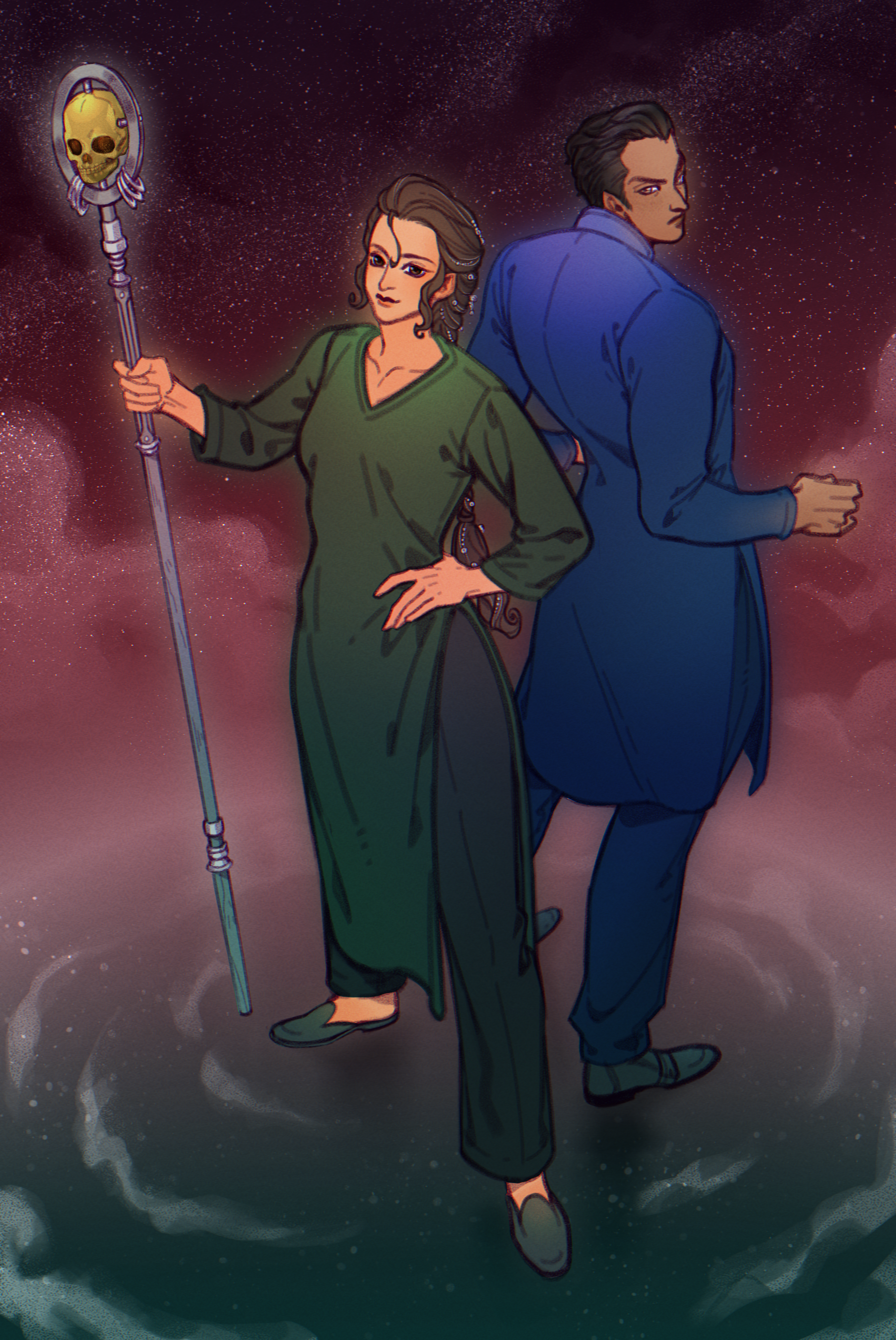
If you’re looking for more Romantasy content, you can also check out my free web serial, A Chime for These Hallowed Bones. It’s an Enemies to Lovers story that’s Alchemized meets Fourth Wing, featuring necromancers in a Desi-influenced setting. Chapters 1 through Chapter 11 Part 3 are currently available!
Thanks for stopping by. Please remember to subscribe and share if you enjoyed what you read here. Take care, everyone, and have a good week.