What's Up with All the Magic Superpowers? (Part 4 - Execution)
Hello, all. Thank you for joining me for the final part of my analysis of magic superpowers. Please see Part 1 and Part 2 if you’d like a general analysis of the concept of magic superpowers as a narrative tool and the reason why I am getting annoyed by modern writers using it. If you’d like a case study of one story that embodies the current, flawed usage of these powers, please see Part 3. Today, we’ll wrap up the analysis with case studies of three additional stories that share these same problems.
Let’s unleash the power one last time.
SPOILER WARNING
Throughout this piece, I am going I provide unmarked spoilers specific to the worldbuilding of:
The Lightlark Saga
While I am going to be focussing on worldbuilding, some of the elements we will discuss may directly or indirectly spoil key plot developments.
ALCHEMY OF SECRETS - THE WRONG GENRE
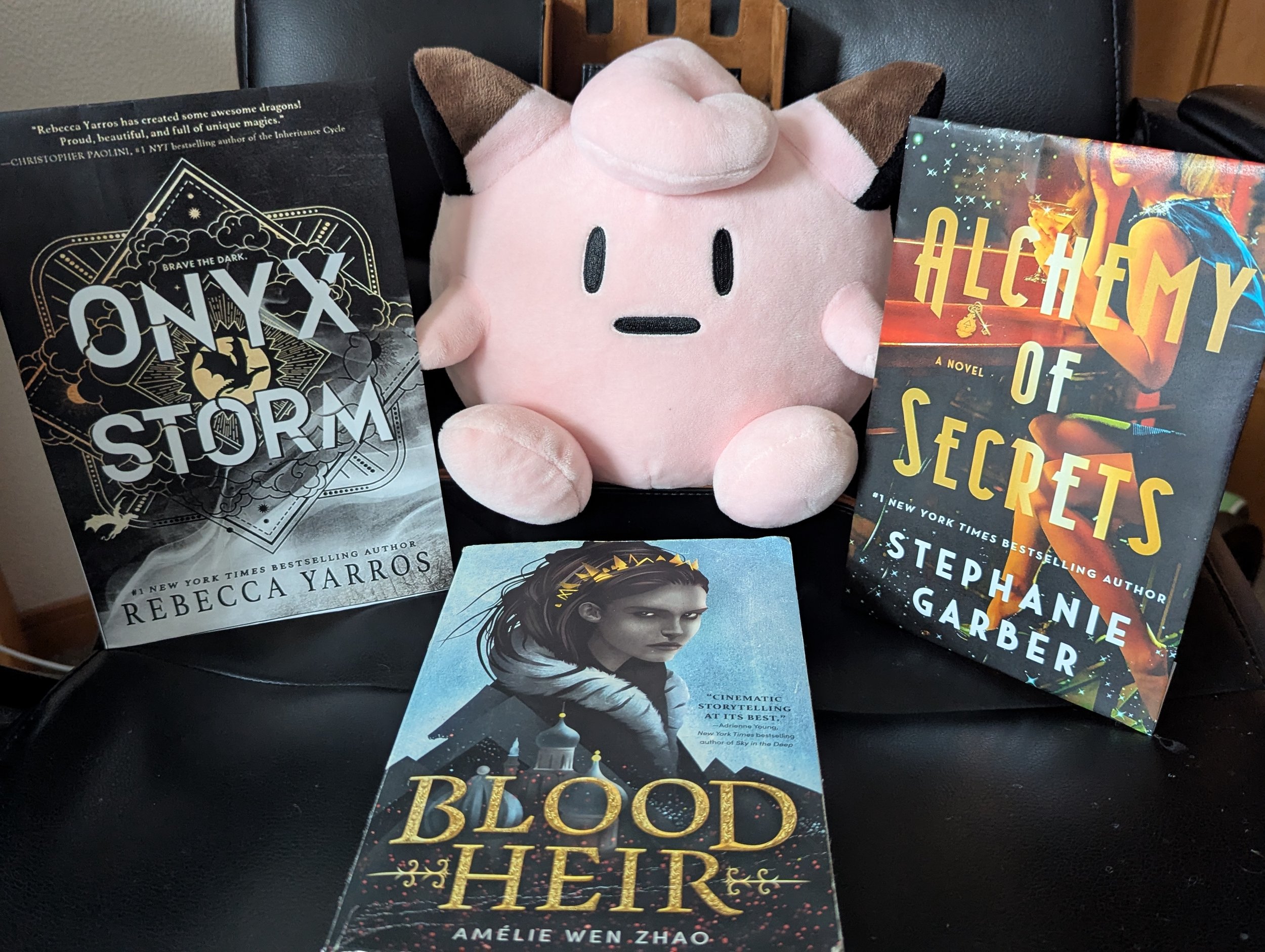
Back in my review of Alchemy of Secrets, I said the magic superpowers didn’t create any issues in terms of the plot or the mechanics of the world. I stand by that. Instead, the issue comes down to a fact I touched upon only briefly in that original review: this book is officially categorized as a Horror story.
Garber stats the story with mysterious, occult forces vying for the Alchemical Heart, a magical relic of unfathomable power. There is a potent sense of mystery and danger. What lurks behind the urban legends that Holland has been delving into as she tries to prove the Devil is objectively real?
It turns out the answer is: there aren’t actually any occult forces. Nearly all the magic manifests as superpowers, and the power structures of this magical world are build around those superpowers.
What is the mission of the Bank, an ancient order dedicated to keeping the Heart out of irresponsible hands? They’re self-appointed managers of who gets superpowers.
What’s the Devil’s nefarious part in all this? He’s just a normal guy with superpowers, who wants the Heart so he can deal in superpowers.
Why is the Heart special? It gives people superpowers. Yes, it also grants wishes, but we are told that it does this by granting superpowers, and the superpowers are the reason the Bank and the Devil want it.
This is … well, frankly, it’s boring. This is what all the mystery and allusions were building up to? A low-stakes MCU?
But hey, this could have been fine. You can build a Horror story around magic superpowers. The problem is that the way Garber distributes superpowers doesn’t enhance the Horror aspect. Every single power is applied in a manner that serves a very obvious narrative purpose.
Gabe manipulates electronics so Garber can lie to the audience in a cliffhanger, having him turn on lights while framing it as some unseen assailant turning them on.
Adam can influence people so that it’s easier to explain how he and Holland can just talk their way out of situations.
The Professor reads minds because she needs to be presented as an intimidating force who can literally get inside Holland’s head.
Holland’s father saw the future to justify the convoluted nonsense of the whole MacGuffin hunt and so Garber could pluck at our heartstrings whenever Holland thinks, “Oh, my father planned all this out for my sake.”
The Devil can't read minds because that would be an easy explanation that would invalidate the reveal of the time loop twist.
Holland's friend is able to “always find a really good parking spot” because Garber wanted comic relief.
The parking space power, in particular, stands out to me. At least all the other powers could logically exist in-world. This one, though, is explicitly a power given to this friend as part of her job for the Bank. If her job was to be the driver of some Bank manager, sure, that would be useful, but we’re explicitly told she’s an administrative assistant. Why would the bank give her this joke power, then? In what way does finding parking spaces help her to do her job? How are we supposed to take the Bank seriously as a sinister force when they hand out magical powers like this to employees and when the narrative takes time to make a joke about how useless this power is?
Given the lack of effort made to high the narrative purpose behind all these powers, I think that the reason Garber opted to go with magical superpowers was that it was easy. She didn't have to build an entire magic system that would actually fit the story she was writing. All she had to do was say, “This person can do this one thing, that person can do that one thing, etc.” And that’s all well and good, but she also wanted this to be a story involving the forces that lurk in the dark and derived its tension from Holland not understanding everything going on around her. The book just couldn’t keep its original vibe going once everything once mysterious was revealed to be so basic and narratively utilitarian.
BLOOD HEIR - SPECTACLE OVER SUBSTANCE
Magic superpowers work better within Blood Heir because it doesn’t lean upon the unknown. It is a Fantasy story telling an oppression narrative, and having a bunch of people with magic superpowers works within that framework. Instead, the issue here is that Zhao wouldn’t respect her own limitations.
Blackstone
This substance is introduced early in the story as one of the three ways to suppress the powers of an Affinite (the other two ways being the powers of the yaegers and the Deys'voshk poison). It is supposed to be immune to manipulate by Affinites and to suppress their powers. The thing is, in practice, this isn’t demonstrated. Ana is able to use her blood manipulation powers on people who are wearing blackstone armor (not even attacking exposed flesh, just reaching her willpower around the armor to grab and throw the bodies inside). We’re not given a coherent reason why the blackstone doesn’t stop her (unlike the yaegers, who can be disabled, or the Deys'voshk, which Ana has built up a tolerate against). So the blackstone ends up being useless.
That would be fine, though. Zhao has the other two weaknesses, and from everything we’re shown, those two weaknesses are consistently applied.
The problem is - Zhao abuses blackstone. She will reference blackstone whenever she wants to establish that a given scene is supposed have tension. She is plugging in this stuff to sustain a vibe even after establishing that it really isn’t a deterrent against her main character. So when the Deys'voshk immunity is stacked on top of that and yaegers are easily overpowered at every turn, it comes across like Zhao wanted to pretend limits existed without having to be bothered with following through on the consequences.
Soft Boundaries
At a couple points in the story, Zhao plays fast and lose with what different Affinites are actually capable of.
An Affinite who manipulates earth - to be specific, dirt and stone - can resurrect plant life.
An Affinite who manipulates emotions can also weave illusions.
Ana’s ability to manipulate blood renders her immune to mind control.
Thematically, there is something of a through line to each of these exceptions, but the story doesn’t treat Affinites as individuals with loose bundles of thematically linked powers. Fire Affinites manipulate fire, not the passion in people’s hearts. Ice Affinites are cryokinetics, not manifestations of stagnations and preservation. The Affinite who manipulates wheat makes bread for a local baker, rather than increasing the fertility of soil. An Affinite’s superpowers are presented as hard associations in every scene except the ones where Zhao wants to play out a certain emotional beat.
Why Even Bother?
Again, I’m pretty sure Zhao applied magic superpowers so that she wouldn’t have to actually think through this magic system. She could just make Ana and other important characters special for the sake of being special and then trigger beats as she needed them.
What really has been convinced of this is not anything we’ve covered thus far. It’s the oppression narrative itself. If all of the Affinites were given access to a general magic system instead of specific superpowers, nothing changes. The military using yaegers works just as well if yaegers are capable of magic beyond the suppression of other Affinite abilities, and the black-market trade of Affinites arguably makes even more sense if an Affinite can be trained to use their magic for anything (rather than enslaving the wheat Affinite and really hoping there’s a baker who’s willing to put up with the financial responsibilities of owning a slave). This world simply doesn’t read like a world where magical superpowers restrict the magic system, so there’s no benefit to the narrative outside of making Ana super special without any training.
And, once more, that would not have been a bad thing, except Zhao couldn’t honor her own limits. She kept bending or invalidating rules. Any one of these would have been easy to overlook, but taken all together, it felt like she wanted to benefits of the magical superpowers shortcut without having to pay attention to when she was running off the road.
THE LIGHTLARK SAGA - SOUNDS LIKE MORE OF THE SAME
I cannot analyze the Lightlark Saga directly. I haven’t read any of its books. Most of my exposure to this series comes from KrimsonRogue’s breakdowns of the individual books.
That said, as I listen to Krimson delve deeper into this series, I can’t help but notice the same pattern on display as appears in The Empyrean.
Lightlark also has a form of lesser magic in the form of the magical abilities available to each realm - abilities that, by themselves, already resemble magical superpowers.
Flairs are more unique superpowers that function similar to Signets.
Magic items can imitate flairs or provide other magical abilities.
In Nightbane, Wildling magic when from just manipulating plants and animals to controlling earth as well.
Compartmentalization and limitations are broken down by love bonds in the first book. Skyshade then introduced Skyres to further break things down and provide Isla with more tools for solving problems.
It sounds like the author, Alex Aster, also just whipped out magic superpowers to avoid having to explain powerful bits of magic and then just kept adding in new elements to solve problems rather than exploring the elements she’d already established.
CONCLUSION
Magical superpowers annoy me not because they’re inherently bad. They annoy me because of how they are abused.
The trend I’m seeing is that modern writers are turning to magical superpowers to avoid the heaving lifting of actually working out a narratively coherent magic system (either in the sense of a hard magic system with firm rules or a soft magic system used with restraint). These are being used as an excuse to arbitrarily assign abilities to characters without having to think through synergies and loopholes. Even so, this would have been fine, except we’re seeing that these same writers don’t know when to stop themselves. They keep adding elements and breaking down limits until they have a magic system so overcomplicated and bloated that they might as well have just half-assed a more traditional magic system from the start. The magic in Notorious Sorcerer may have been a lazily fabricated mess, but I’ll give Evans this - at least she didn’t put on a pretense of that her story was going to have any effective limits.
And, to be clear, the issues we’ve covered here aren’t unique to magical superpowers. Any magic system could become as messy as this. The reason I’m griping about it is that magical superpowers should be a means to avoid this mess. The fact they’re getting misused shows a fundamental lack of investment by the authors in writing Fantasy (or, in Garber’s case, Horror).
I’m worried this situation isn’t going to get better in the near future. Not in trad publishing, at the very least. The Fantasy market (and Horror) is being flooded with content by authors who seem to want to write things because they’re popular, not because the author actually understands or cares about the genre. Until trad publishing stops prioritizing BookTok followings above quality, it’s just going to keep pushing authors who have the incentive and motivation to take shortcuts but not the common sense to navigate those shortcuts safely.
But that then begs the question: are there still authors who are using the shortcut effectively?
SYNCHRONOUS IS LIFE
I would not consider Will, the magic system of Hierarchy, to be magical superpowers. It’s a magic system with very limited applications, but one that anyone who meets the requirements can engage with, study, and master. That said, I think it’s worth discussing in association with this Interlude.
See, in The Strength of the Few, Islington creates a scenario that is functionally similar to magical superpowers. We learn in this book that the applications of Will go far beyond those that were introduced in The Will of the Many. However, these functions are compartmentalized across the three worlds of the setting. And the few first thing Islington does, upon establishing this system of worldwide magical superpowers, is to blast a hole clear through the limitations that would prevent the overall system from being abused.
Only in this case, it works. I think it’s worthwhile to explore why.
So, to follow-up to this Interlude and open up the deep-dive analysis of The Strength of the Few, we’re going to do a Spotlight Analysis on Sunday, January 11th, digging into the details of how the magic system was compartmentalized to prevent synergy and how Islington pivots the failure of this limitation into a driver for the narrative. I hope you’ll join me for it.
Until then, thank you all for stopping by. Please remember to subscribe and share if you enjoyed what you read here. Take care, everyone, and have a good week.